
Bringing Bees Back Into The City
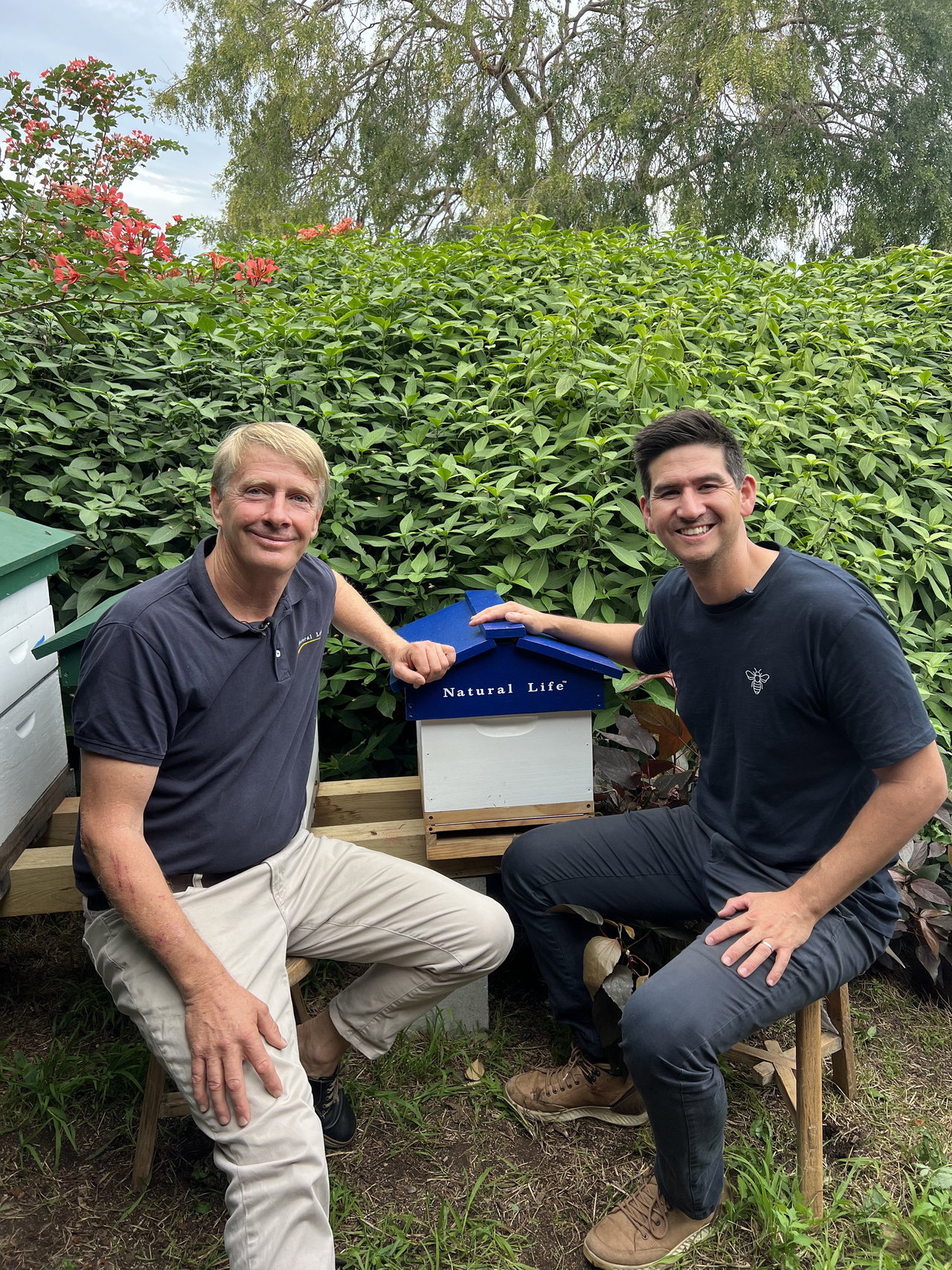
We sat down with John from Rooftop Bees to talk about corporate beehives, urban biodiversity, bee education, and why reconnecting people with nture maters more than ever. Listen via the links below.


Around The Hive Podcast
ALL THINGS BEES
For our first episode of Around The Hive, we sat down with John from Rooftop Bees to talk about all things bees, sustainability, Yuzu and the natural world. Scroll down below to listen to the podcast.
Sign up to our newsletter below to never miss an episode. Don't be shy, we don't sting.
Episode 1: Rooftop Bees
“It takes 12 worker bees their entire lifetime to make just one teaspoon of honey. When you understand that, you never look at honey the same way again.”
John Prince, Rooftop Bees.
Watch the podcast below, or scroll down to read the full interview. Sign up to our newsletter here.

Full Interview
John, thank you for coming here today, our first Around the Hive chat. We're here to talk about all things bees. It's an industry that I personally love. So we want to learn more about you and your business, Rooftop bees. So John, you spent sixteen years in the corporate life. Why the big change?
Yeah, I did. I spent a fair while in the corporate world, sitting there at my desk, looking out the window and dreaming of a better life. Like thousands are. I always knew that I wanted to do something a bit more nature-based, outdoors, and I'm quite creative, so I wanted to do something with my hands.
And beekeeping was just sort of like a sideline hobby for me, and I started to investigate what a business centred around bees would look like. So I did some research, looked at North America, looked at Europe, and I saw that businesses were partnering with bees and big multinationals, putting beehives on their campuses or rooftops.
And I got really inspired by that. I kind of was still working in my corporate job and I started to conjure up this idea of being a rooftop beekeeper here in Australia. I registered the domain name, put up a very basic website and straight away people started inquiring.
So I kept working my other job for about 12 months and then COVID hit. So that put a bit of a halt onto my plans to fully make the jump. But then after about 12 months, I took the plunge and never looked back.
I was going to say, any regrets?
No, not at all. I've probably got one of the coolest jobs in the world, to be honest.
I've followed you for the last couple of years. It's been brilliant. Yeah, to have an office on top of a rooftop overlooking the harbour with bees all around you. So you deal with a bunch of different corporations, big, global, local?
Yeah, we range from working directly with landlords of corporate buildings to household brands like Qantas, David Jones, Archie Rose. And each client's kind of got a different motive as to why they want to bring bees to their building. Some might be around sustainability, ESG. A lot just want to do something for the environment. And others are doing it because they want to connect their tenant community with the natural world. And bees are a fantastic way to be able to do that in the city.
Okay. So in Melbourne, you've got hives?
Yeah, we've got about 15 sites down in Melbourne.
I was going to say, any regrets?
No, not at all. I've probably got one of the coolest jobs in the world, to be honest.
I've followed you for the last couple of years. It's been brilliant. Yeah, to have an office on top of a rooftop overlooking the harbour with bees all around you. So you deal with a bunch of different corporations, big, global, local?
Yeah, we range from working directly with landlords of corporate buildings to household brands like Qantas, David Jones, Archie Rose. And each client's kind of got a different motive as to why they want to bring bees to their building. Some might be around sustainability, ESG. A lot just want to do something for the environment. And others are doing it because they want to connect their tenant community with the natural world. And bees are a fantastic way to be able to do that in the city. We've got about 15 sites down in Melbourne, 35 sites here in Sydney, And a couple of sites up in Brisbane. Yeah, so all up and down the East Coast.
Oh, wow. Spreading the good word of the bees. And you're growing.
There's a lot of growth opportunity in the major capital cities. I think businesses are shifting their thought process around how they can be contributing back to the environment. There's a lot of reporting frameworks around the environment that are starting to become legislated. So a lot of these businesses are looking at their impact on nature, looking at their impact on the environment and looking at their supply chain and how that's impacting the environment. And they're having to take action. It used to be kind of a nice to have. Now it's a must have. And bees can kind of play into that strategy. So they're going to be held
accountable.
Yeah, absolutely. They've got to be held accountable. What else do they have to do? Or is there a certain quota that they need to measure?
Yeah, it's all to do with things like carbon offsets, net zero. There's a lot of focus on waste and recycling. I think some of our clients who have bees also measure their waste on a floor-by-floor level. So they actually monitor how effective each... tenant of theirs in their building is recycling, separating their waste. And the garbage provider is using clear bags and actually identifying where they've not separated rubbish. And each floor gets a metric and the overall building gets a performance score. Yeah, so there's a huge amount of accountability now.
And that's all around the world as well? So if it's Google, are they under Australian legislation?
Yeah, under Australian legislation. We're a little bit slower here in Australia. There's some laws that are only just coming into effect now. But if you look to North America and Europe, that sort of stuff's been around for a few more years. So back at the Bs, companies like CBRE, the real estate, big real estate company.
What do they get out of having bees on their properties?
Yeah, so it's multifaceted. At its core level, CBRE is a sort of a property management company. They're looking at ways for them to reduce their footprint on the environment and looking for sustainable programs that they can implement across their portfolio. So at its core level, it could be just bringing initiatives to their portfolio and their base buildings that relate back to nature and biodiversity. They've also got tenant communities that they have to manage and inspire. And the bees become a really good vector for those conversations. We run a whole range of workshops and activations that bring the tenant community together. We talk about bees, honey, beeswax, the impact on the environment. And we basically have those little conversations with people in the office and let them go back to their desks feeling good about their day at work.
Yeah, great. So what about the structure of the beehive, the queen down to the worker bee. How does that relate to, or can you make that connection to a corporate environment?
Yeah, absolutely. There's a lot of linkages and similarities between the corporate world and the beehive. I mean, the beehive is like a building in the city. It's full of tenants and each bee and each cast of bee has a different type of role and responsibility. So we always try and link that back to what the workers are perhaps going through in their day-to-day. You might have the queen, which a lot of people think is the ruler of the hive. So if you kind of relate that back to the executives or the CEOs of the companies, it's really important for the queen to make sure that her pheromone, her presence is felt throughout the hive to keep the morale high. So my linkage back to people is like I always tell the story that a CEO can't be hidden in their office or working outside. They've actually got to be present. They've got to be around. They've got to be walking the floor. Spreading their energy.
Absolutely. Fantastic. And the worker bees and the drones?
Yeah, each bee, the worker bees obviously spend half of their life inside the hive, caring and looking after the internal needs of the hive. And then in the second half of their life, they actually leave in the forages, like we can see behind us. They're the ones that are in the second half of their life and they're out collecting resources that are required for the hive. And then you've got the drones, which are the male bees. They primarily are there to reproduce and spread their genetics. time and summertime when the hives are growing and there's a lot of virgin queens in the environment, those drones from the hives are out trying to mate with local queens to spread their genetics and reproduce.
Okay, all right. And the honey you produce from these hives that are on the rooftops in Sydney, Melbourne and Brisbane, what do you do with that?
Yeah, so the honey that's produced by all those hives in the city goes directly back to those clients. The beautiful thing about that is everyone loves honey and the honey is a reflection of Mother Nature. At any point in time when the bees are foraging in nature, they're bringing back the nectar from the flowers. And those bees are telling a story. It's all connected back to the flowers. So the honey that we produce on those CBD rooftops in springtime might be really light in colour. It could be really florally and tasty. And then as we move through the seasons, like in autumn now, when we're doing our last harvest for the season, the flower profiles have changed. So the colour of the honey has gone a bit darker. The flavour profiles become more caramelly and more elasticity. And then those represent opportunities to teach people and educate people about honey. It's not all the same colour on the supermarket shelf. Honey does have a profile and we should be tasting it and enjoying it a little bit more like a wine or a fine cheese.
And I was going to ask you, is there a difference between urban beekeeping to rural beekeeping?
Oh, yeah, absolutely. Do you notice a difference in the honey? Yeah, so keeping bees in the city... comes with a whole range of different environmental challenges you know we're on 30 stories high we might be down a wind tunnel down by the harbour you might have a pedestrian way really close. So the way we position our hives and the way we manage our hives has to be very different to the conventional way of doing it down on a farm or in a rural setting. Sometimes the bees can not get a lot of sunlight, so they might have a damper hive or a cooler environment that we need to consider. So the main difference is in the city there, they've got access to a lot of food, the Botanic Gardens, Barangaroo, Foreshore, Rooftop.
They travel seven kilometres, don't they? Some say bees are lazy, would you agree?
Yeah, up to five to seven kilometres is their flying radius. So in the city, there's always an abundance of food all year round. And they're not lazy, they're efficient. Efficient, that's the word. So bees are incredibly efficient. So they want the maximum output for the least amount of energy. So if they find a food source that's a couple of kilometres from the hive. They'll go straight there. They'll go straight there and they do a waggle dance to tell the rest of the hive.
The waggle dance is a sequence of moves that a worker bee who's found a food source will come back to the hive. So they find some nectar. Yeah, they'll fly back to the hive and they will do a dance at a particular angle to where that food source is in relation to the sun. So that waggle dance might take place, say, on a 45 degree angle. That's telling the bees in the hive that if you leave the hive, 45 degrees from the entrance, if you fly, then they do the dance for one or two seconds. Those seconds represents the distance. So say it's a two-second dance, two kilometres at 45 degrees from the hive. And then the vigorousness of that dance also tells the bees how good that nectar source is.
So that dance gets done in the hive?
The bees will watch it. They'll feel the vibrations on the wax. That's why it's really important to give the bees natural beeswax so they can feel those vibrations. A lot of commercial beekeepers will use plastic frames. There's plastic frames in the market that don't allow those vibrations to take place in the hive. They'll come and watch that dance and then replicate that dance so that it can be repeated out to more bees and then they'll send foragers out to investigate. Now, the interesting thing is they also bring samples back. So these worker bees will bring nectar back from that food source as they're doing the dance and give samples out so that the bees can taste and smell that food source. They've got incredibly good smell. So they could pick up that scent from kilometres away.
So what's a tasting prove?
This bee's got a nice tasting honey? It confirms the nectar source. So when they're trying to identify a tree or area of trees that are good for nectar, it just validates that that's the correct location for the bee that they were talking about back in the hive. Then all the bees will come, they'll forage, they'll make several trips throughout their day, dozens of trips actually, come back until that nectar source is depleted and then more bees will be out scouting and it's just an ongoing process. It's never ending.
Fantastic, that's unreal. Now, the other thing you do, I read about, is your incursions. Yeah. Because I love this part. I've had three kids watching grow up. They're learning about bees now, which they love. But you're actually going into schools with a beehive. Yeah. And teaching young kids exactly what you're teaching them. The older kids. Absolutely, yeah. Kids of the future, right?
Yeah. And I've got two young kids myself. Taking that passion for bees and educating kids just comes very naturally. And the bees and insects and nature are embedded into our curriculum. So kids are already learning about bees and insects before they go to school. So we go in, we teach kids from sort of year two right through to high school. And it's quite interesting because the stuff we tell them about the bees is exactly about what we're talking about now. It's the same stuff. It's just about how we deliver that information and make it interesting for the kids to absorb.
So you put suits on them?
Yeah, we do dress-ups. We don't open up a hive. We take a demonstration, like an observation hiving, so they can look at the hive. And you point out the clean bee, the worker bee, the dry bee. And then they get dressed up and they learn about the life cycle, the different casts. And you teach them where honey comes from. It doesn't come from the supermarket. Yeah, and they all pull their own jar of honey to take
home as well.
Oh, that's awesome. Good on you, mate. That's great. So I'm just curious. How do you make money out of rooftop bees? Obviously, you produce honey. Yes. But I can't imagine that's enough to actually sustain it.
No, I was pretty clear on that from the get-go. I didn't think that that business model that was predicated on honey production would be sustainable. And that's very agricultural. So to do it here in the city on top of a building's rooftop would command a premium. So I had to commercialise the bees and the hives themselves. So the commercial model is a lease and management arrangement. So we lease the bees. these corporates, have a team that manage thebeehives, do their regular maintenance checks, and 100% of the honey goes back to the client. It's all included as part of their package.
How many employees?
Yeah, we operate across three cities, so I've got a team of six. There's a few beekeepers there. There's three beekeepers, there's some back office staff.Obviously, I manage the whole thing. We run a pretty lean ship.
Yeah, fantastic. And I met Hugo, French beekeeper.
He used to work in Paris, and he was looking after beehives on top of buildings and the Notre Dame bees, which were quite famous when the cathedral caught fire. And I remember looking at this.
Was it his fault?
Yeah, we could say it is haha. No, I don't actually know why the fire happened, but it was quite funny because that was... predates my time as a beekeeper, but I remember distinctly seeing that on the news. And the news story was more interested in the survival of those bees than they were the actual cathedral and when they found out that the bees had survived, everyone was like celebrating in the streets in Paris because the bees had survived.
Well, here's a question for you then. My wife is French. We go back to France quite often. Yes. I don't really visit beehives, but I understand that bee... Products like, you know, obviously honey, royal jelly, propolis, bee pollen, they're in, you know, they are on the shelves in every pharmacy, in every health food store, in every supermarket,in not just France, but in Italy and Germany, all throughout Europe. So it's popular and it has been forever. Bee products, bee ingredients are popular in Europe, Eastern Europe. Asia and the Middle East. Why not so much here, do you think?
Yeah, look, you're 100% right. That symbiotic relationship between bees and humans has extended back thousands of years. And I think it's... I think it's largely cultural. You know, you've got a lot of these really big civilizations like the Greeks and the Egyptians, the Minoans. They all worked hand in hand with the bees and utilized all the products from the hive as medicine. And those cultures have just brought that forward through time and history. Whereas here in Australia, because we're a multicultural, we're a young nation, we're multicultural, we've got people that have come from all different parts of the world. That knowledge base... still exists, but it's all fragmented and fractured into smaller community and cultural segments. So if you go speak to, like I've recently had people asking me about a thing called bee bread. which is the fermented pollen inside the cell with honey. And that's seemingly available in Europe as a product, but not available here in Australia. So people know about it. It's just not mainstream. So I think it's an education thing. It'll take time. And obviously products like what Natural Life produces, which are so beneficial to people and their health, is starting to gain traction. It's all under our nose here. The bees have been around for 127 million years. we just need to kind of be more aware of what the value it is that they bring.
So now we're going to talk about your Yuzu honey, which you specialise in. No one else in Australia does it except for rooftop bees. Yuzu honey won, rooftop bees won, gold medal award at the Sydney Fine Food Show. Congratulations, that's pretty awesome. So no one knows about, well, I suspect not a lot of people know about yuzu and what yuzu does with the honey. So for those that don't know, tell us a bit about yuzu.
Yeah, so yuzu is quite a rare fruit. It's an ancient citrus that originated centuries ago in the mountains of China and has gained a lot of popularity in Asia, particularly through Japan and Korea. Oh, okay. It's found now in desserts, drinks. A lot of top chefs and restaurants are using it to grate over on top of dishes as a finishing product. And in the recent years, there's been a few growers that have kind of popped up in Australia, recognising that there's a real opportunity here. So, yeah, a few years ago, I experimented with some yuzu peel and juice infused it into honey and I've got Japanese heritage my mum's Japanese so I just played around with something that was a bit of a nod to my culture and I infused it gave it to a few people and they were like oh my god this is amazing I love it it's my favourite and so then they were like how do I get more of this so I ended up going down to the farm down in rural Victoria and met Brian and Jane from Mountain Yuzu and formed a beautiful relationship with them. And now we buy like hundreds of kilos of peel and juice every year and infuse it directly into our honey.
Yeah, wonderful. And if people want to get your Yuzu honey, where do they go?
Yeah,they can get it through Natural Life. You're selling it for us very kindly. Rooftop Bees. We've got a Yuzu honey website. There's select retailers around the country that stock it as well. Okay. But as you said, it's a super unique. flavor. It's infused. Sweet, light and delicious. It's citrusy. It's a really mellow flavor. It's great on yogurt. It's great on dairy. So any cheeses that you might have. A lot of my customers will even just dilute it with some warm water and have it as a yuzu honey tea. Okay, that's a good idea. Even on top of ice cream is really nice too.
Yeah, unreal. Well done. If there's one thing you'd like people to know about bees, what would it be?
Okay, so there's so many good things about bees. Look, I think the world's a very unsettled place at the moment. You know, there's a lot of volatility around with what's going on in the world. And I think the bees keep us grounded. The bees are a symbol of... our own kind of beginnings and it keeps us really centered. The bees have been around for so long and they've perfected their colony and their whole community and the way they're structured and operate. So I think that's a really reassuring for us is if we can take a little bit of time out of our day with all the stress and pressure that's going on at the moment in the world and just have a think about the bees or whether it's nature, going for a walk, looking at trees, engaging with animals or insects. I think that'll help us get through this volatile period.
Nice answer. Can we finish on one fun fact about bees?
Yeah. Okay. So the worker bee, which is female, only lives for 42 days. And the first half of their life, so the first 21 days, is inside the hive. And the second half of their life is outside the hive. They become foragers. Right. And in that time, they only make one twelfth of a teaspoon of honey. So it takes 12 worker bees entire lifetimes to make one teaspoon of honey. Gentle reminder for us not to waste our food.
Wow. Yeah. I said fun. I said fun. That's sad. Haha. That was good. Thank you, John.
You can also listen to the podcast on Spotify below.
Full Interview
John, thank you for coming here today, our first Around the Hive chat. We're here to talk about all things bees. It's an industry that I personally love. So we want to learn more about you and your business, Rooftop bees. So John, you spent sixteen years in the corporate life. Why the big change?
Yeah, I did. I spent a fair while in the corporate world, sitting there at my desk, looking out the window and dreaming of a better life. Like thousands are. I always knew that I wanted to do something a bit more nature-based, outdoors, and I'm quite creative, so I wanted to do something with my hands.
And beekeeping was just sort of like a sideline hobby for me, and I started to investigate what a business centred around bees would look like. So I did some research, looked at North America, looked at Europe, and I saw that businesses were partnering with bees and big multinationals, putting beehives on their campuses or rooftops.
And I got really inspired by that. I kind of was still working in my corporate job and I started to conjure up this idea of being a rooftop beekeeper here in Australia. I registered the domain name, put up a very basic website and straight away people started inquiring.
So I kept working my other job for about 12 months and then COVID hit. So that put a bit of a halt onto my plans to fully make the jump. But then after about 12 months, I took the plunge and never looked back.
I was going to say, any regrets?
No, not at all. I've probably got one of the coolest jobs in the world, to be honest.
I've followed you for the last couple of years. It's been brilliant. Yeah, to have an office on top of a rooftop overlooking the harbour with bees all around you. So you deal with a bunch of different corporations, big, global, local?
Yeah, we range from working directly with landlords of corporate buildings to household brands like Qantas, David Jones, Archie Rose. And each client's kind of got a different motive as to why they want to bring bees to their building. Some might be around sustainability, ESG. A lot just want to do something for the environment. And others are doing it because they want to connect their tenant community with the natural world. And bees are a fantastic way to be able to do that in the city.
Okay. So in Melbourne, you've got hives?
Yeah, we've got about 15 sites down in Melbourne.
I was going to say, any regrets?
No, not at all. I've probably got one of the coolest jobs in the world, to be honest.
I've followed you for the last couple of years. It's been brilliant. Yeah, to have an office on top of a rooftop overlooking the harbour with bees all around you. So you deal with a bunch of different corporations, big, global, local?
Yeah, we range from working directly with landlords of corporate buildings to household brands like Qantas, David Jones, Archie Rose. And each client's kind of got a different motive as to why they want to bring bees to their building. Some might be around sustainability, ESG. A lot just want to do something for the environment. And others are doing it because they want to connect their tenant community with the natural world. And bees are a fantastic way to be able to do that in the city. We've got about 15 sites down in Melbourne, 35 sites here in Sydney, And a couple of sites up in Brisbane. Yeah, so all up and down the East Coast.
Oh, wow. Spreading the good word of the bees. And you're growing.
There's a lot of growth opportunity in the major capital cities. I think businesses are shifting their thought process around how they can be contributing back to the environment. There's a lot of reporting frameworks around the environment that are starting to become legislated. So a lot of these businesses are looking at their impact on nature, looking at their impact on the environment and looking at their supply chain and how that's impacting the environment. And they're having to take action. It used to be kind of a nice to have. Now it's a must have. And bees can kind of play into that strategy. So they're going to be held
accountable.
Yeah, absolutely. They've got to be held accountable. What else do they have to do? Or is there a certain quota that they need to measure?
Yeah, it's all to do with things like carbon offsets, net zero. There's a lot of focus on waste and recycling. I think some of our clients who have bees also measure their waste on a floor-by-floor level. So they actually monitor how effective each... tenant of theirs in their building is recycling, separating their waste. And the garbage provider is using clear bags and actually identifying where they've not separated rubbish. And each floor gets a metric and the overall building gets a performance score. Yeah, so there's a huge amount of accountability now.
And that's all around the world as well? So if it's Google, are they under Australian legislation?
Yeah, under Australian legislation. We're a little bit slower here in Australia. There's some laws that are only just coming into effect now. But if you look to North America and Europe, that sort of stuff's been around for a few more years. So back at the Bs, companies like CBRE, the real estate, big real estate company.
What do they get out of having bees on their properties?
Yeah, so it's multifaceted. At its core level, CBRE is a sort of a property management company. They're looking at ways for them to reduce their footprint on the environment and looking for sustainable programs that they can implement across their portfolio. So at its core level, it could be just bringing initiatives to their portfolio and their base buildings that relate back to nature and biodiversity. They've also got tenant communities that they have to manage and inspire. And the bees become a really good vector for those conversations. We run a whole range of workshops and activations that bring the tenant community together. We talk about bees, honey, beeswax, the impact on the environment. And we basically have those little conversations with people in the office and let them go back to their desks feeling good about their day at work.
Yeah, great. So what about the structure of the beehive, the queen down to the worker bee. How does that relate to, or can you make that connection to a corporate environment?
Yeah, absolutely. There's a lot of linkages and similarities between the corporate world and the beehive. I mean, the beehive is like a building in the city. It's full of tenants and each bee and each cast of bee has a different type of role and responsibility. So we always try and link that back to what the workers are perhaps going through in their day-to-day. You might have the queen, which a lot of people think is the ruler of the hive. So if you kind of relate that back to the executives or the CEOs of the companies, it's really important for the queen to make sure that her pheromone, her presence is felt throughout the hive to keep the morale high. So my linkage back to people is like I always tell the story that a CEO can't be hidden in their office or working outside. They've actually got to be present. They've got to be around. They've got to be walking the floor. Spreading their energy.
Absolutely. Fantastic. And the worker bees and the drones?
Yeah, each bee, the worker bees obviously spend half of their life inside the hive, caring and looking after the internal needs of the hive. And then in the second half of their life, they actually leave in the forages, like we can see behind us. They're the ones that are in the second half of their life and they're out collecting resources that are required for the hive. And then you've got the drones, which are the male bees. They primarily are there to reproduce and spread their genetics. time and summertime when the hives are growing and there's a lot of virgin queens in the environment, those drones from the hives are out trying to mate with local queens to spread their genetics and reproduce.
Okay, all right. And the honey you produce from these hives that are on the rooftops in Sydney, Melbourne and Brisbane, what do you do with that?
Yeah, so the honey that's produced by all those hives in the city goes directly back to those clients. The beautiful thing about that is everyone loves honey and the honey is a reflection of Mother Nature. At any point in time when the bees are foraging in nature, they're bringing back the nectar from the flowers. And those bees are telling a story. It's all connected back to the flowers. So the honey that we produce on those CBD rooftops in springtime might be really light in colour. It could be really florally and tasty. And then as we move through the seasons, like in autumn now, when we're doing our last harvest for the season, the flower profiles have changed. So the colour of the honey has gone a bit darker. The flavour profiles become more caramelly and more elasticity. And then those represent opportunities to teach people and educate people about honey. It's not all the same colour on the supermarket shelf. Honey does have a profile and we should be tasting it and enjoying it a little bit more like a wine or a fine cheese.
And I was going to ask you, is there a difference between urban beekeeping to rural beekeeping?
Oh, yeah, absolutely. Do you notice a difference in the honey? Yeah, so keeping bees in the city... comes with a whole range of different environmental challenges you know we're on 30 stories high we might be down a wind tunnel down by the harbour you might have a pedestrian way really close. So the way we position our hives and the way we manage our hives has to be very different to the conventional way of doing it down on a farm or in a rural setting. Sometimes the bees can not get a lot of sunlight, so they might have a damper hive or a cooler environment that we need to consider. So the main difference is in the city there, they've got access to a lot of food, the Botanic Gardens, Barangaroo, Foreshore, Rooftop.
They travel seven kilometres, don't they? Some say bees are lazy, would you agree?
Yeah, up to five to seven kilometres is their flying radius. So in the city, there's always an abundance of food all year round. And they're not lazy, they're efficient. Efficient, that's the word. So bees are incredibly efficient. So they want the maximum output for the least amount of energy. So if they find a food source that's a couple of kilometres from the hive. They'll go straight there. They'll go straight there and they do a waggle dance to tell the rest of the hive.
The waggle dance is a sequence of moves that a worker bee who's found a food source will come back to the hive. So they find some nectar. Yeah, they'll fly back to the hive and they will do a dance at a particular angle to where that food source is in relation to the sun. So that waggle dance might take place, say, on a 45 degree angle. That's telling the bees in the hive that if you leave the hive, 45 degrees from the entrance, if you fly, then they do the dance for one or two seconds. Those seconds represents the distance. So say it's a two-second dance, two kilometres at 45 degrees from the hive. And then the vigorousness of that dance also tells the bees how good that nectar source is.
So that dance gets done in the hive?
The bees will watch it. They'll feel the vibrations on the wax. That's why it's really important to give the bees natural beeswax so they can feel those vibrations. A lot of commercial beekeepers will use plastic frames. There's plastic frames in the market that don't allow those vibrations to take place in the hive. They'll come and watch that dance and then replicate that dance so that it can be repeated out to more bees and then they'll send foragers out to investigate. Now, the interesting thing is they also bring samples back. So these worker bees will bring nectar back from that food source as they're doing the dance and give samples out so that the bees can taste and smell that food source. They've got incredibly good smell. So they could pick up that scent from kilometres away.
So what's a tasting prove?
This bee's got a nice tasting honey? It confirms the nectar source. So when they're trying to identify a tree or area of trees that are good for nectar, it just validates that that's the correct location for the bee that they were talking about back in the hive. Then all the bees will come, they'll forage, they'll make several trips throughout their day, dozens of trips actually, come back until that nectar source is depleted and then more bees will be out scouting and it's just an ongoing process. It's never ending.
Fantastic, that's unreal. Now, the other thing you do, I read about, is your incursions. Yeah. Because I love this part. I've had three kids watching grow up. They're learning about bees now, which they love. But you're actually going into schools with a beehive. Yeah. And teaching young kids exactly what you're teaching them. The older kids. Absolutely, yeah. Kids of the future, right?
Yeah. And I've got two young kids myself. Taking that passion for bees and educating kids just comes very naturally. And the bees and insects and nature are embedded into our curriculum. So kids are already learning about bees and insects before they go to school. So we go in, we teach kids from sort of year two right through to high school. And it's quite interesting because the stuff we tell them about the bees is exactly about what we're talking about now. It's the same stuff. It's just about how we deliver that information and make it interesting for the kids to absorb.
So you put suits on them?
Yeah, we do dress-ups. We don't open up a hive. We take a demonstration, like an observation hiving, so they can look at the hive. And you point out the clean bee, the worker bee, the dry bee. And then they get dressed up and they learn about the life cycle, the different casts. And you teach them where honey comes from. It doesn't come from the supermarket. Yeah, and they all pull their own jar of honey to take
home as well.
Oh, that's awesome. Good on you, mate. That's great. So I'm just curious. How do you make money out of rooftop bees? Obviously, you produce honey. Yes. But I can't imagine that's enough to actually sustain it.
No, I was pretty clear on that from the get-go. I didn't think that that business model that was predicated on honey production would be sustainable. And that's very agricultural. So to do it here in the city on top of a building's rooftop would command a premium. So I had to commercialise the bees and the hives themselves. So the commercial model is a lease and management arrangement. So we lease the bees. these corporates, have a team that manage thebeehives, do their regular maintenance checks, and 100% of the honey goes back to the client. It's all included as part of their package.
How many employees?
Yeah, we operate across three cities, so I've got a team of six. There's a few beekeepers there. There's three beekeepers, there's some back office staff.Obviously, I manage the whole thing. We run a pretty lean ship.
Yeah, fantastic. And I met Hugo, French beekeeper.
He used to work in Paris, and he was looking after beehives on top of buildings and the Notre Dame bees, which were quite famous when the cathedral caught fire. And I remember looking at this.
Was it his fault?
Yeah, we could say it is haha. No, I don't actually know why the fire happened, but it was quite funny because that was... predates my time as a beekeeper, but I remember distinctly seeing that on the news. And the news story was more interested in the survival of those bees than they were the actual cathedral and when they found out that the bees had survived, everyone was like celebrating in the streets in Paris because the bees had survived.
Well, here's a question for you then. My wife is French. We go back to France quite often. Yes. I don't really visit beehives, but I understand that bee... Products like, you know, obviously honey, royal jelly, propolis, bee pollen, they're in, you know, they are on the shelves in every pharmacy, in every health food store, in every supermarket,in not just France, but in Italy and Germany, all throughout Europe. So it's popular and it has been forever. Bee products, bee ingredients are popular in Europe, Eastern Europe. Asia and the Middle East. Why not so much here, do you think?
Yeah, look, you're 100% right. That symbiotic relationship between bees and humans has extended back thousands of years. And I think it's... I think it's largely cultural. You know, you've got a lot of these really big civilizations like the Greeks and the Egyptians, the Minoans. They all worked hand in hand with the bees and utilized all the products from the hive as medicine. And those cultures have just brought that forward through time and history. Whereas here in Australia, because we're a multicultural, we're a young nation, we're multicultural, we've got people that have come from all different parts of the world. That knowledge base... still exists, but it's all fragmented and fractured into smaller community and cultural segments. So if you go speak to, like I've recently had people asking me about a thing called bee bread. which is the fermented pollen inside the cell with honey. And that's seemingly available in Europe as a product, but not available here in Australia. So people know about it. It's just not mainstream. So I think it's an education thing. It'll take time. And obviously products like what Natural Life produces, which are so beneficial to people and their health, is starting to gain traction. It's all under our nose here. The bees have been around for 127 million years. we just need to kind of be more aware of what the value it is that they bring.
So now we're going to talk about your Yuzu honey, which you specialise in. No one else in Australia does it except for rooftop bees. Yuzu honey won, rooftop bees won, gold medal award at the Sydney Fine Food Show. Congratulations, that's pretty awesome. So no one knows about, well, I suspect not a lot of people know about yuzu and what yuzu does with the honey. So for those that don't know, tell us a bit about yuzu.
Yeah, so yuzu is quite a rare fruit. It's an ancient citrus that originated centuries ago in the mountains of China and has gained a lot of popularity in Asia, particularly through Japan and Korea. Oh, okay. It's found now in desserts, drinks. A lot of top chefs and restaurants are using it to grate over on top of dishes as a finishing product. And in the recent years, there's been a few growers that have kind of popped up in Australia, recognising that there's a real opportunity here. So, yeah, a few years ago, I experimented with some yuzu peel and juice infused it into honey and I've got Japanese heritage my mum's Japanese so I just played around with something that was a bit of a nod to my culture and I infused it gave it to a few people and they were like oh my god this is amazing I love it it's my favourite and so then they were like how do I get more of this so I ended up going down to the farm down in rural Victoria and met Brian and Jane from Mountain Yuzu and formed a beautiful relationship with them. And now we buy like hundreds of kilos of peel and juice every year and infuse it directly into our honey.
Yeah, wonderful. And if people want to get your Yuzu honey, where do they go?
Yeah,they can get it through Natural Life. You're selling it for us very kindly. Rooftop Bees. We've got a Yuzu honey website. There's select retailers around the country that stock it as well. Okay. But as you said, it's a super unique. flavor. It's infused. Sweet, light and delicious. It's citrusy. It's a really mellow flavor. It's great on yogurt. It's great on dairy. So any cheeses that you might have. A lot of my customers will even just dilute it with some warm water and have it as a yuzu honey tea. Okay, that's a good idea. Even on top of ice cream is really nice too.
Yeah, unreal. Well done. If there's one thing you'd like people to know about bees, what would it be?
Okay, so there's so many good things about bees. Look, I think the world's a very unsettled place at the moment. You know, there's a lot of volatility around with what's going on in the world. And I think the bees keep us grounded. The bees are a symbol of... our own kind of beginnings and it keeps us really centered. The bees have been around for so long and they've perfected their colony and their whole community and the way they're structured and operate. So I think that's a really reassuring for us is if we can take a little bit of time out of our day with all the stress and pressure that's going on at the moment in the world and just have a think about the bees or whether it's nature, going for a walk, looking at trees, engaging with animals or insects. I think that'll help us get through this volatile period.
Nice answer. Can we finish on one fun fact about bees?
Yeah. Okay. So the worker bee, which is female, only lives for 42 days. And the first half of their life, so the first 21 days, is inside the hive. And the second half of their life is outside the hive. They become foragers. Right. And in that time, they only make one twelfth of a teaspoon of honey. So it takes 12 worker bees entire lifetimes to make one teaspoon of honey. Gentle reminder for us not to waste our food.
Wow. Yeah. I said fun. I said fun. That's sad. Haha. That was good. Thank you, John.
Watch the podcast below, or scroll down to read the full interview. Sign up to our newsletter here.
Episode 1: Rooftop Bees
For our first episode of Around The Hive, we sat down with John from Rooftop Bees to talk about all things bees, , sustainability, Yuzu and the natural world.
You can learn more John & his business here.
“It takes 12 worker bees their entire lifetime to make just one teaspoon of honey. When you understand that, you never look at honey the same way again.”
John Prince, Rooftop Bees.
Follow us on all platforms.