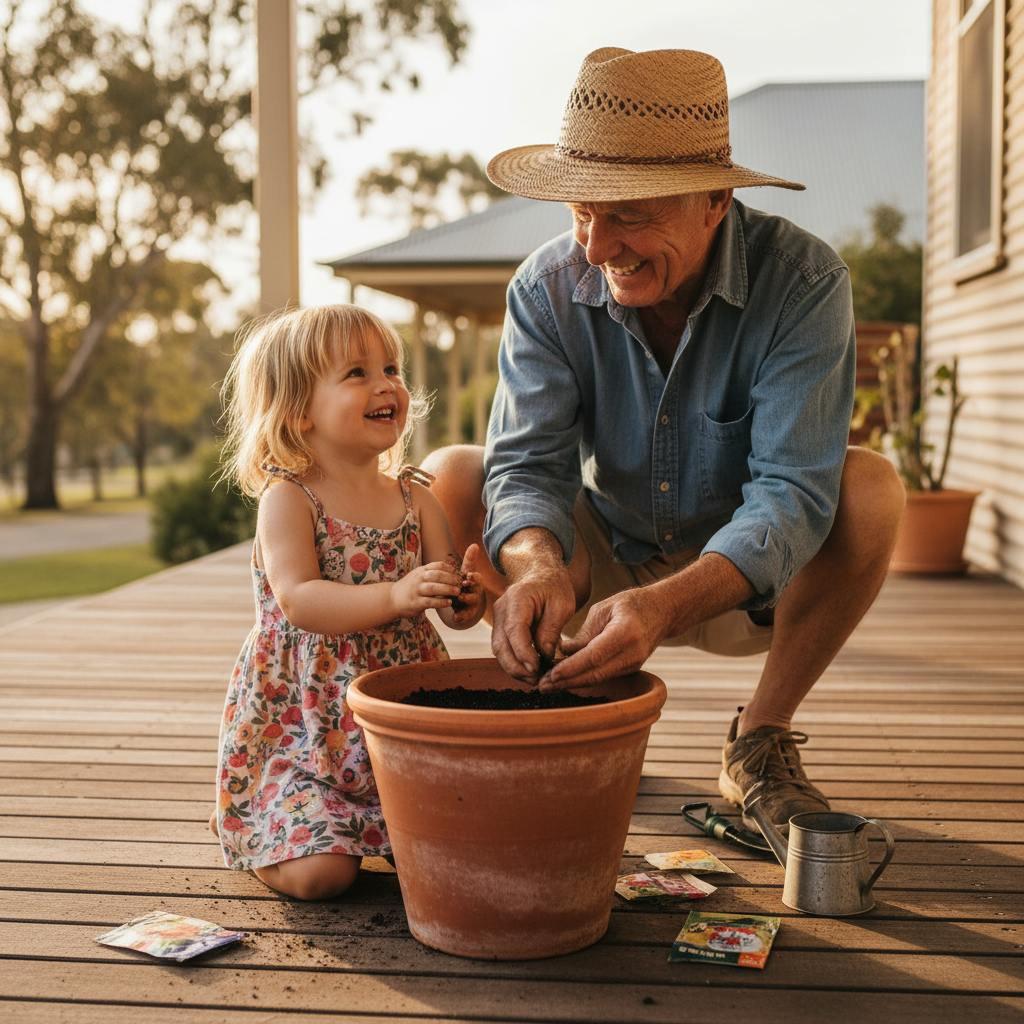
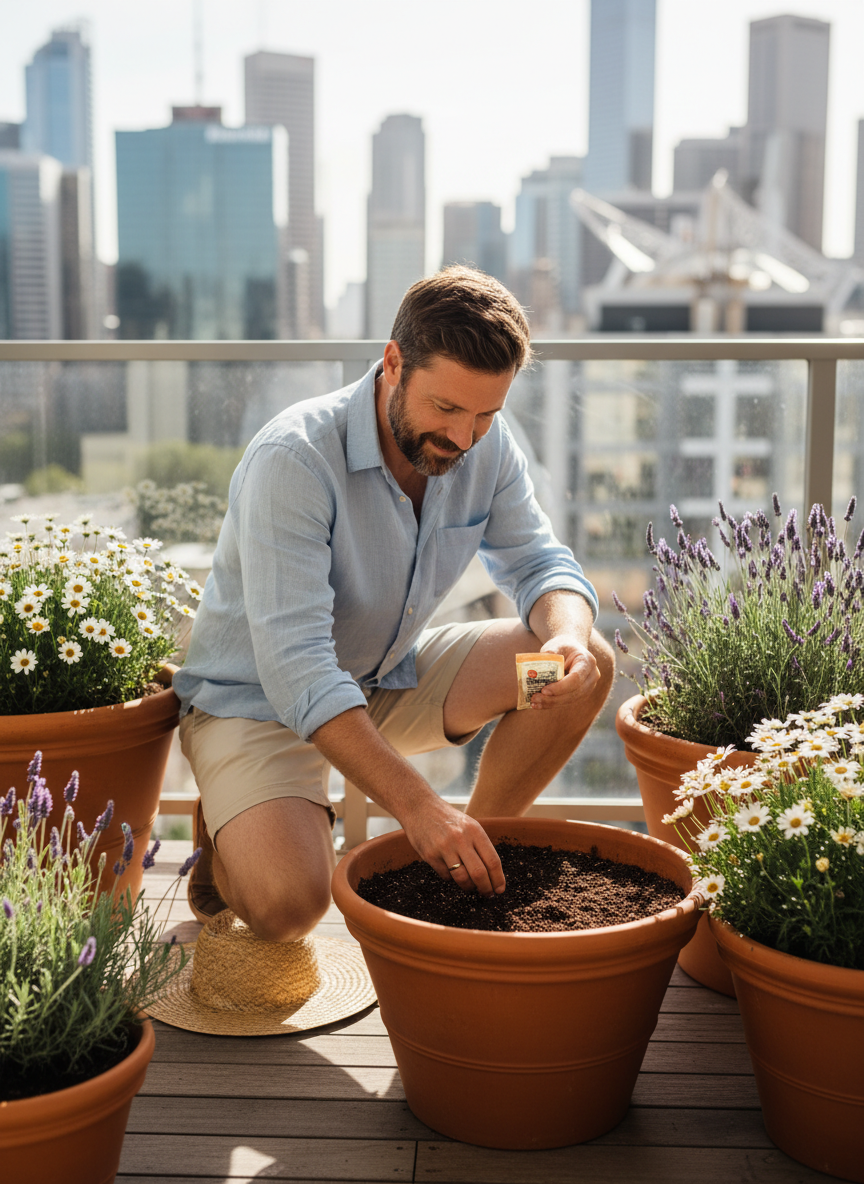
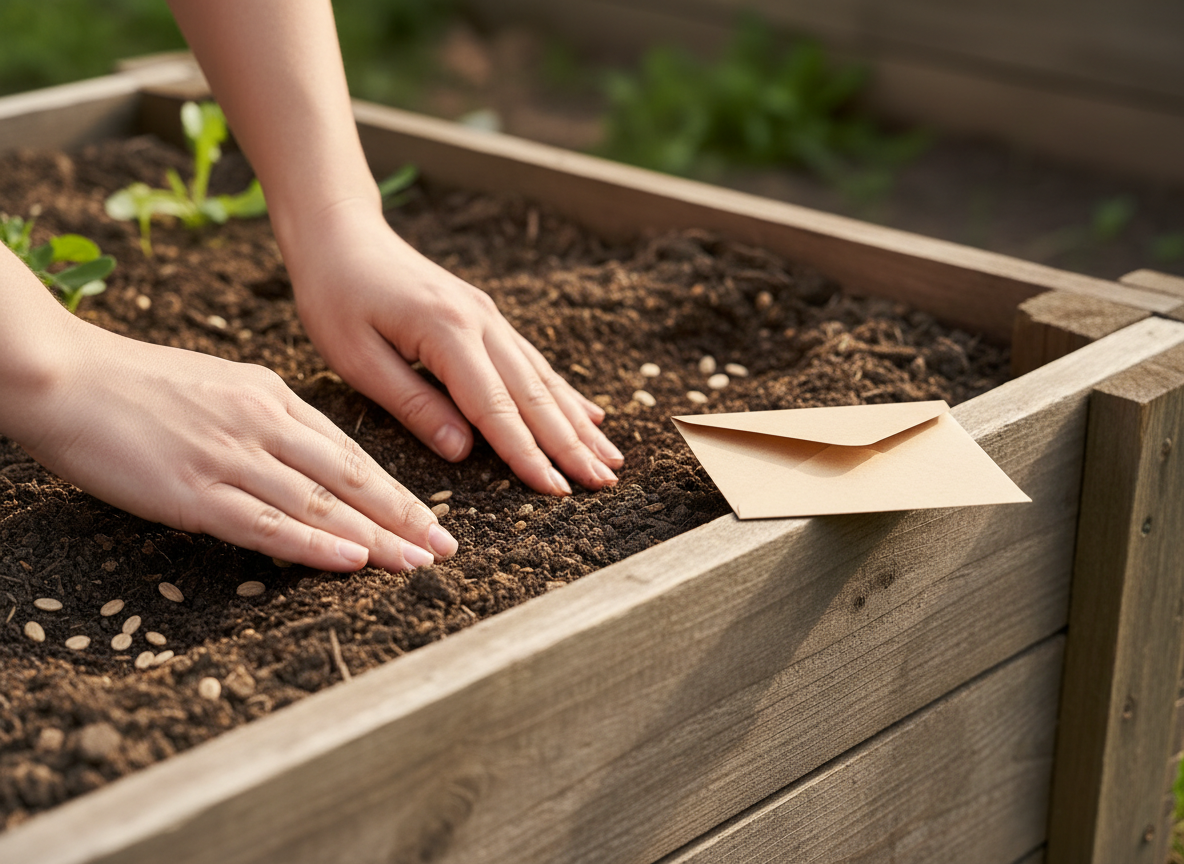
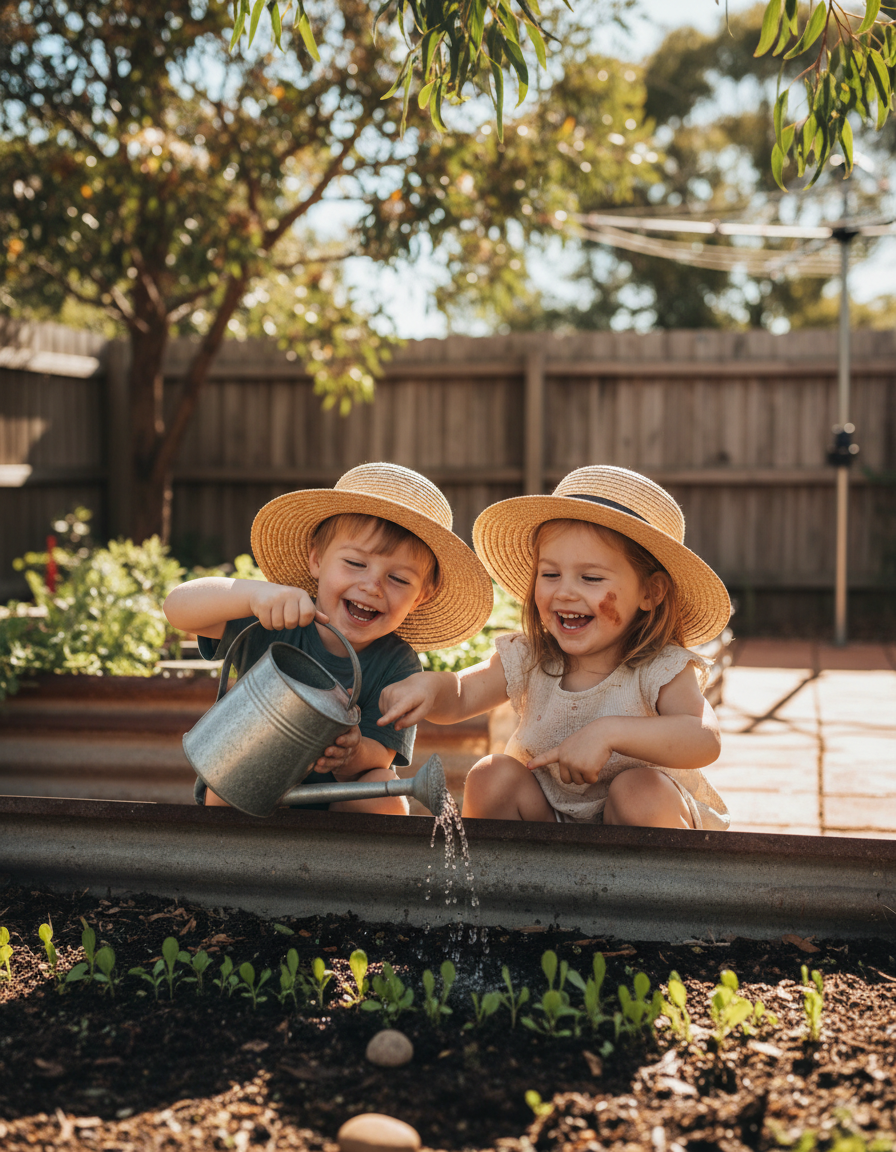
For thirty years our family has worked alongside bees. This summer, every Natural Life order comes with a free spoonful of bee-friendly flower seeds. This guide shows you how to turn it into a garden full of native pollinators, whether you have a backyard, a courtyard or a sunny balcony.
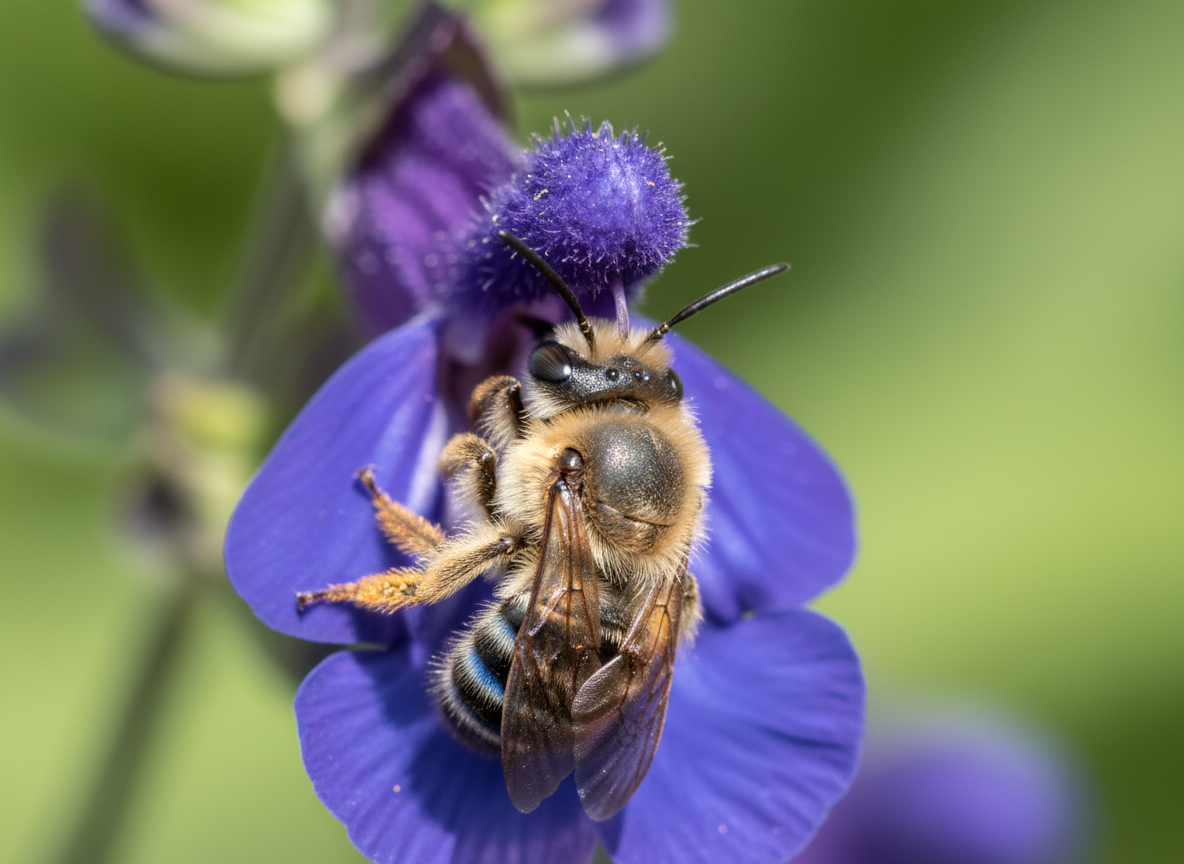
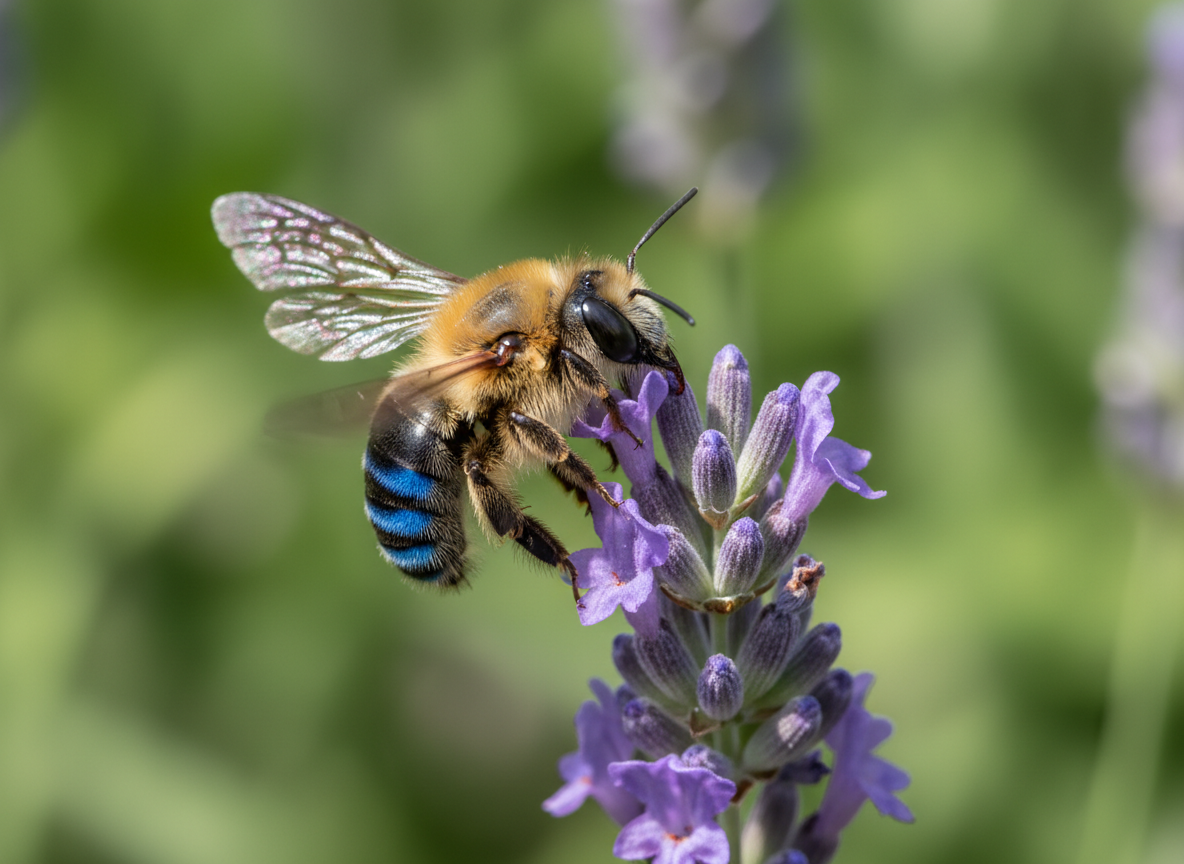
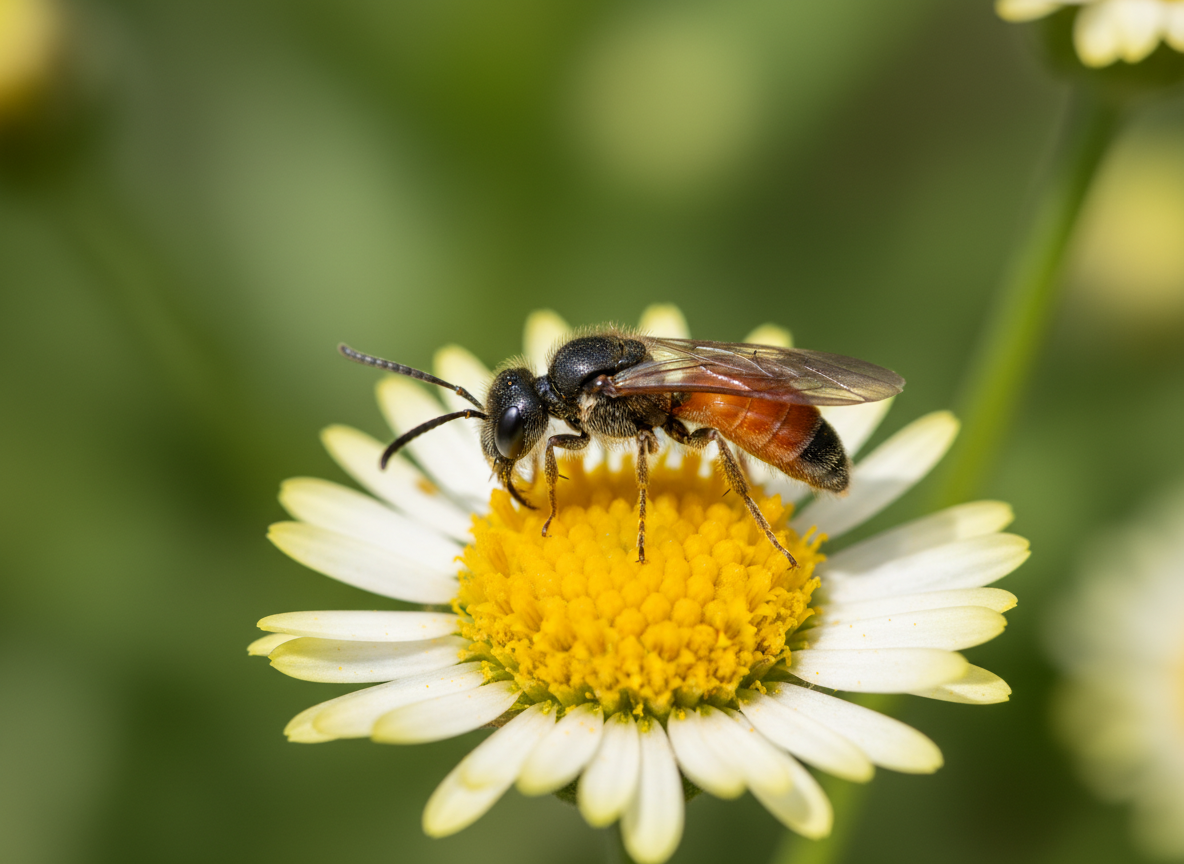
The blue-banded bee, one of around 2,000 native bee species found across Australia.
01 · Why Pollinators Matter
Small Wings, Big Job
Bees, butterflies, hoverflies, beetles and even honeyeaters move pollen from flower to flower, so plants can set seed and fruit. Loss of habitat, pesticides and gardens with few flowers mean our pollinators often struggle to find enough to eat. Every flowering pot or garden bed gives them somewhere to feed.
1 in 3
About one in every three mouthfuls of food we eat depends on pollinators, from almonds and apples to pumpkins and berries.
~2,000
Australia has around 2,000 native bee species. Most live alone, many are tiny, and plenty don't sting at all.
Buzz
Blue-banded bees "buzz pollinate", vibrating pollen loose from tomato, eggplant and blueberry flowers. Honey bees can't do this.
As beekeepers, we see every day how healthy bees depend on a steady supply of flowers. Planting for all pollinators, not only honey bees, is the simplest way to help.
02 · What To Plant By Region
The Easiest Natives For Your Climate
Native plants and native bees evolved together, so local flowers are the best food you can offer. These hardy, easy-care choices suit beginners and flower for long periods. Find your climate zone below.
Tropical
Darwin, Cairns, Townsville, the Kimberley
Grevillea 'Honey Gem': flowers almost all year, a nectar magnet
Paper daisies (Rhodanthe): carpets of spring colour from seed
Sow seedsAutumn, March–May
Go Local For The Best Results
Plants native to your own suburb feed your local bees best. Ask a nearby native or community nursery, or your council, for local plant lists. Many councils also run free plant giveaways.
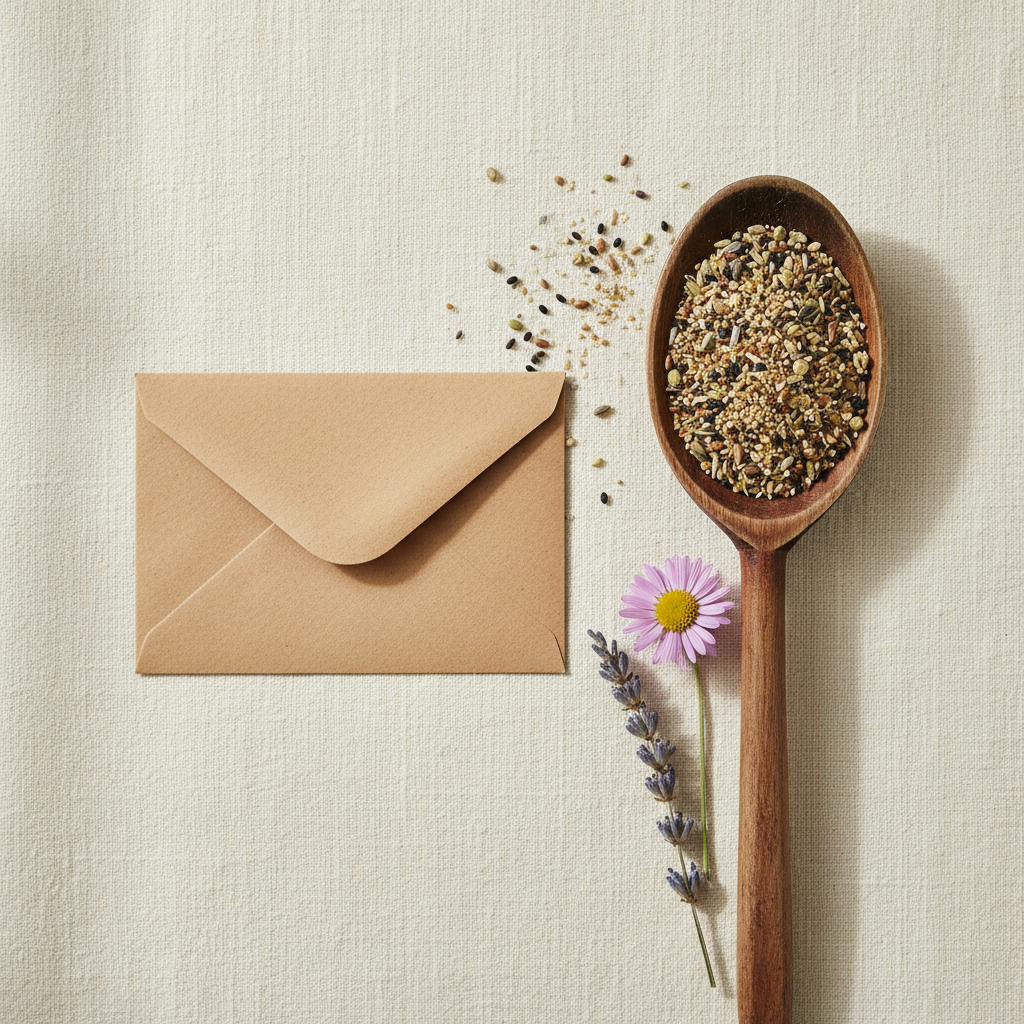
Your free pack holds a spoonful of a "shake and rake" wildflower blend: tiny seeds mixed with vermiculite, a natural mineral that spreads them evenly and holds moisture while they germinate. The 17 varieties include Aussie natives and flowers bees love, chosen to bloom in waves so there's food all season long.
The 17 flowers in your mix
Swan River Daisy Brachyscome iberidifoliaAussie native
Native Violet Viola hederaceaAussie native
Calendula Calendula officinalis
Cornflower Centaurea cyanus
Californian Poppy Eschscholzia californica
Fineflower Gilia leptantha
Toadflax Linaria maroccana
Alyssum Lobularia maritima
Wallflower Erysimum cheiri
Nemophila Nemophila menziesii
Field Poppy Papaver rhoeas
African Marigold Tagetes erecta
Chinese Forget-Me-Not Cynoglossum amabile
Borage Borago officinalis
Evening Primrose Oenothera pallida
Lavender Lavandula angustifolia
Sage Salvia officinalis
Seed mix: Bee Friendly Flower Mix by Mr Fothergill's. Want more natives? Pair your pack with the local plants in section 2.
04 · How To Plant It
From Spoon To Bloom In Five Steps
1
Pick a sunny spot
Choose somewhere with at least six hours of sun a day: a garden bed, a raised planter or a pot at least 30cm wide.
2
Prepare the soil
Rake the soil until it's fine and crumbly, removing weeds and stones. In pots, fill with a quality seed-raising mix.
3
Sprinkle your spoonful
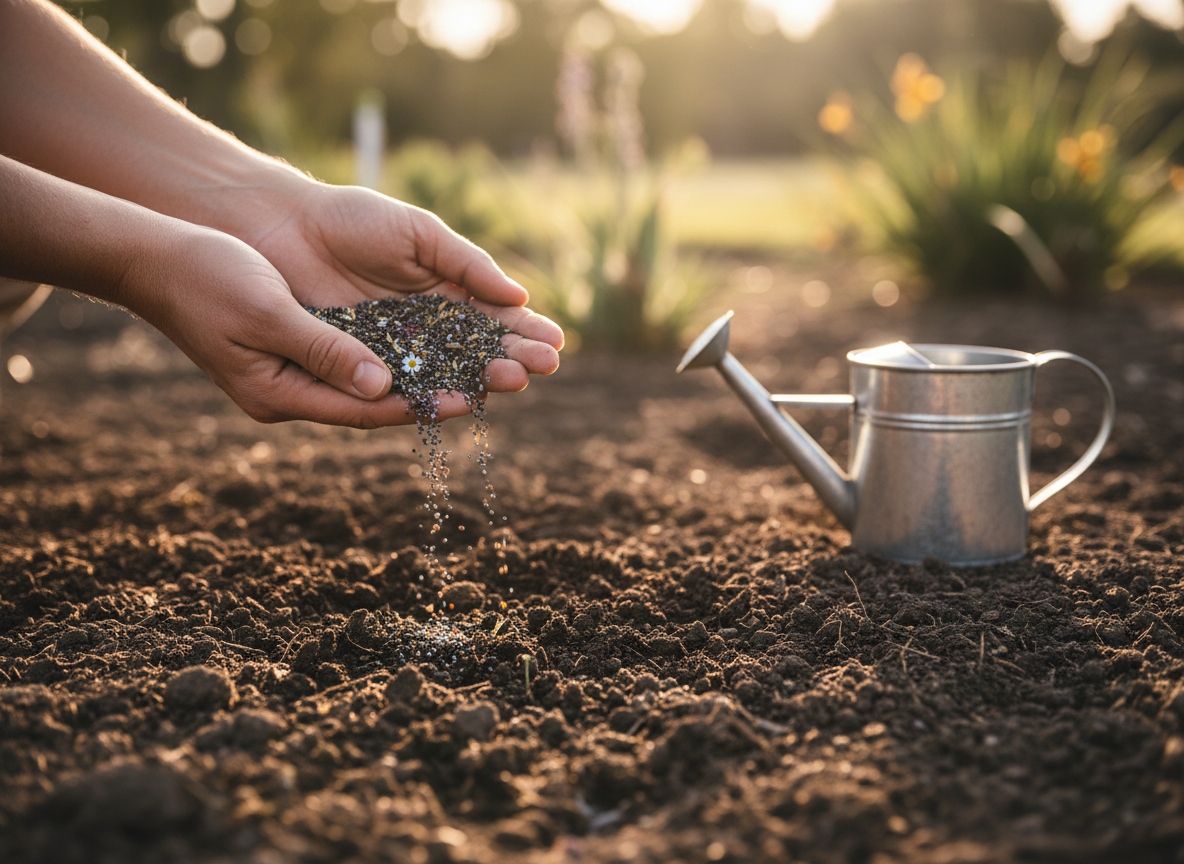
Scatter the mix thinly and evenly on a still day. The seeds are light and blow away easily.
4
Rake lightly & press
Rake over gently or add a light dusting of soil (2–3mm), then press down with your palm so the seed touches the soil.
5
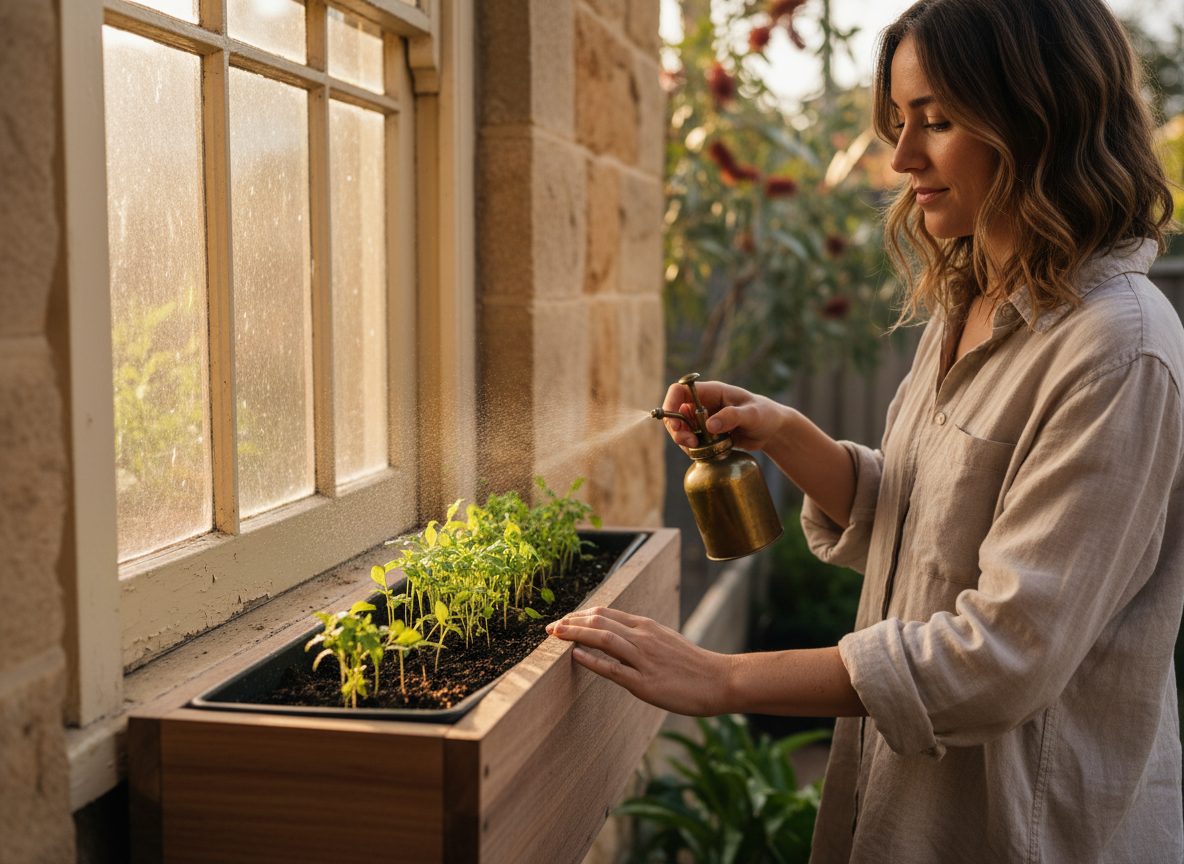
Keep it moist
Mist or water gently every day or two until seedlings appear, usually in 7–21 days. Once established, water deeply once or twice a week.
Care & grow tips
Water in the morning so leaves dry before evening, and ease off once plants are growing strongly.
Go easy on fertiliser. Wildflowers bloom best in lean soil. If you feed natives, use a low-phosphorus fertiliser.
Snip off spent flowers to keep new blooms coming, then let a few go to seed at season's end for next year.
Sow again every 2–3 weeks for continuous colour. Some perennials in the mix won't flower until their second year.
Skip the sprays. Even some organic pesticides harm bees. Hose off aphids or let ladybirds deal with them.
From Our Community
Spoonfuls Planted Across Australia
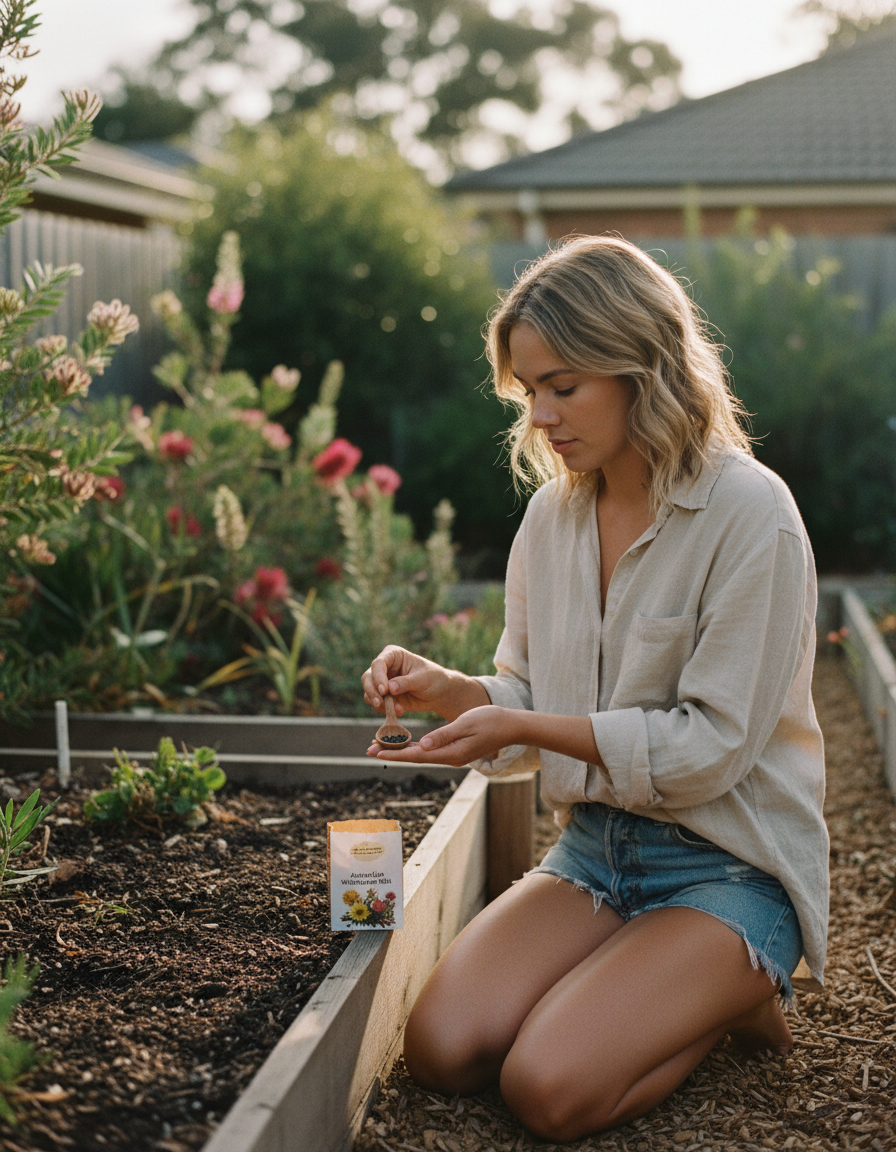
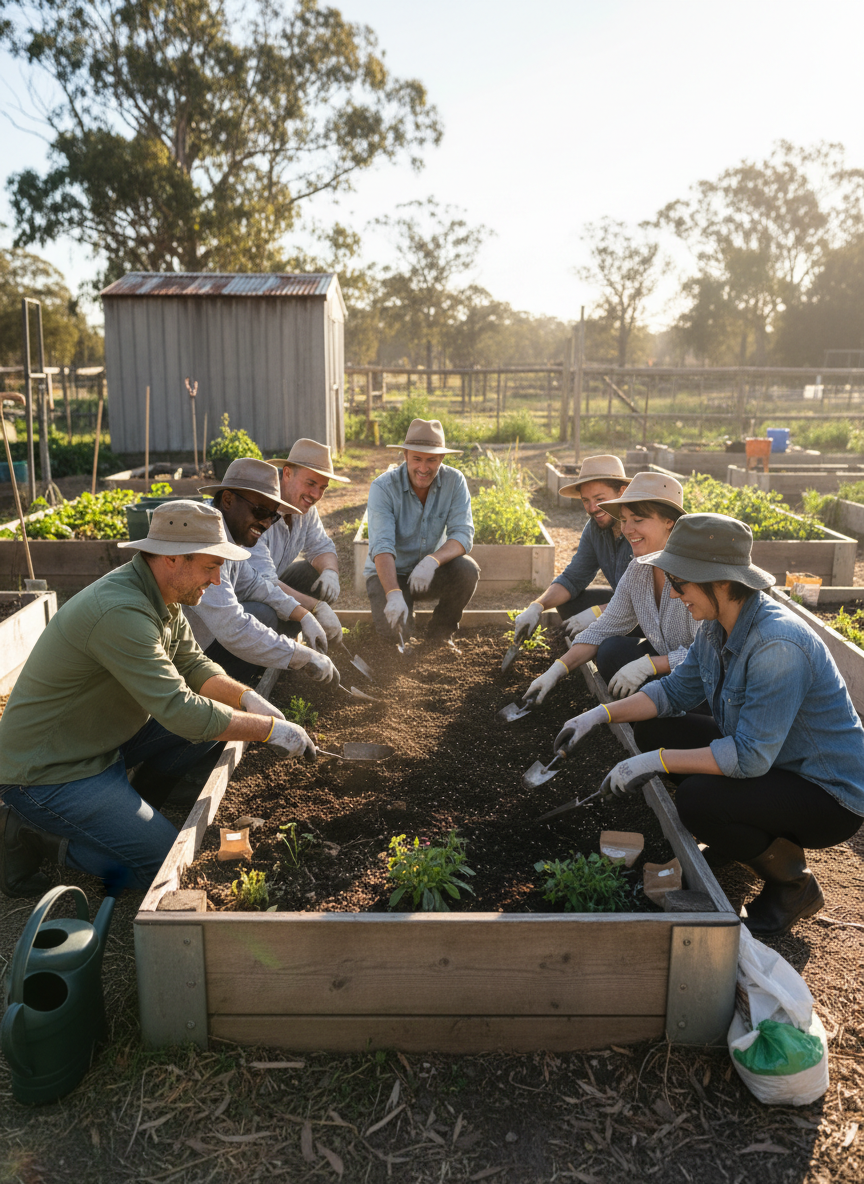
From backyard beds to tiny balconies, families everywhere are sowing their free seeds this summer. Snap your seedlings as they grow and share them with us. Your garden could be next on the wall.
Bees need food all year, not only in spring. Combine your seed mix with a few winter-flowering natives and your garden never goes hungry. Timing shown is for temperate gardens; warmer regions flower earlier and for longer.
In flowerNative Australian native Pollinator Week
Flowering months for the seed mix and recommended native plants
Plant
Jan
Feb
Mar
Apr
May
Jun
Jul
Aug
Sep
Oct
Nov
Dec
Swan River DaisyNativeIn your pack
In flower in Jan
In flower in Feb
In flower in Mar
In flower in Sep
In flower in Oct
In flower in Nov
In flower in Dec
Native VioletNativeIn your pack
In flower in Jan
In flower in Feb
In flower in Sep
In flower in Oct
In flower in Nov
In flower in Dec
AlyssumIn your pack
In flower in Jan
In flower in Feb
In flower in Mar
In flower in Apr
In flower in Aug
In flower in Sep
In flower in Oct
In flower in Nov
In flower in Dec
Californian PoppyIn your pack
In flower in Jan
In flower in Sep
In flower in Oct
In flower in Nov
In flower in Dec
CornflowerIn your pack
In flower in Jan
In flower in Oct
In flower in Nov
In flower in Dec
BorageIn your pack
In flower in Jan
In flower in Feb
In flower in Sep
In flower in Oct
In flower in Nov
In flower in Dec
LavenderIn your pack
In flower in Jan
In flower in Feb
In flower in Oct
In flower in Nov
In flower in Dec
African MarigoldIn your pack
In flower in Jan
In flower in Feb
In flower in Mar
In flower in Apr
In flower in Nov
In flower in Dec
CalendulaIn your pack
In flower in Jun
In flower in Jul
In flower in Aug
In flower in Sep
In flower in Oct
In flower in Nov
Native Fuchsia (Correa)NativeAdd a plant
In flower in Apr
In flower in May
In flower in Jun
In flower in Jul
In flower in Aug
In flower in Sep
Purple Coral PeaNativeAdd a plant
In flower in Jul
In flower in Aug
In flower in Sep
In flower in Oct
Grevillea 'Honey Gem'NativeAdd a plant
In flower in Jan
In flower in Feb
In flower in Mar
In flower in Apr
In flower in May
In flower in Jun
In flower in Jul
In flower in Aug
In flower in Sep
In flower in Oct
In flower in Nov
In flower in Dec
Coastal RosemaryNativeAdd a plant
In flower in Jan
In flower in Feb
In flower in Mar
In flower in Apr
In flower in Aug
In flower in Sep
In flower in Oct
In flower in Nov
In flower in Dec
Swipe the table sideways to see every month.
06 · Balconies & Courtyards
No Backyard? No Problem
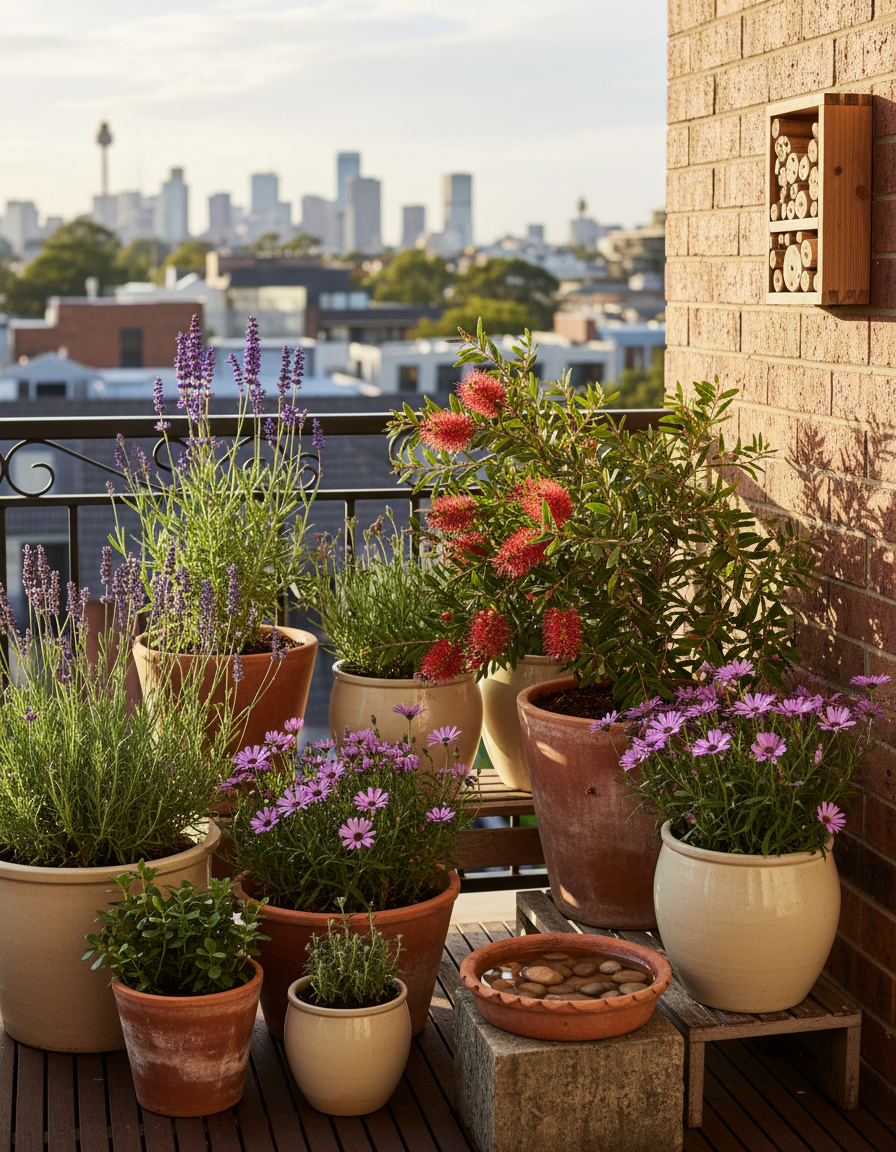
Native bees will happily visit a balcony several storeys up if there's something worth the trip. A few well-chosen pots are enough to create a feeding stop in the city.
Go big and group pots
Use pots at least 30cm wide and cluster them together. A mass of flowers is easier for bees to find.
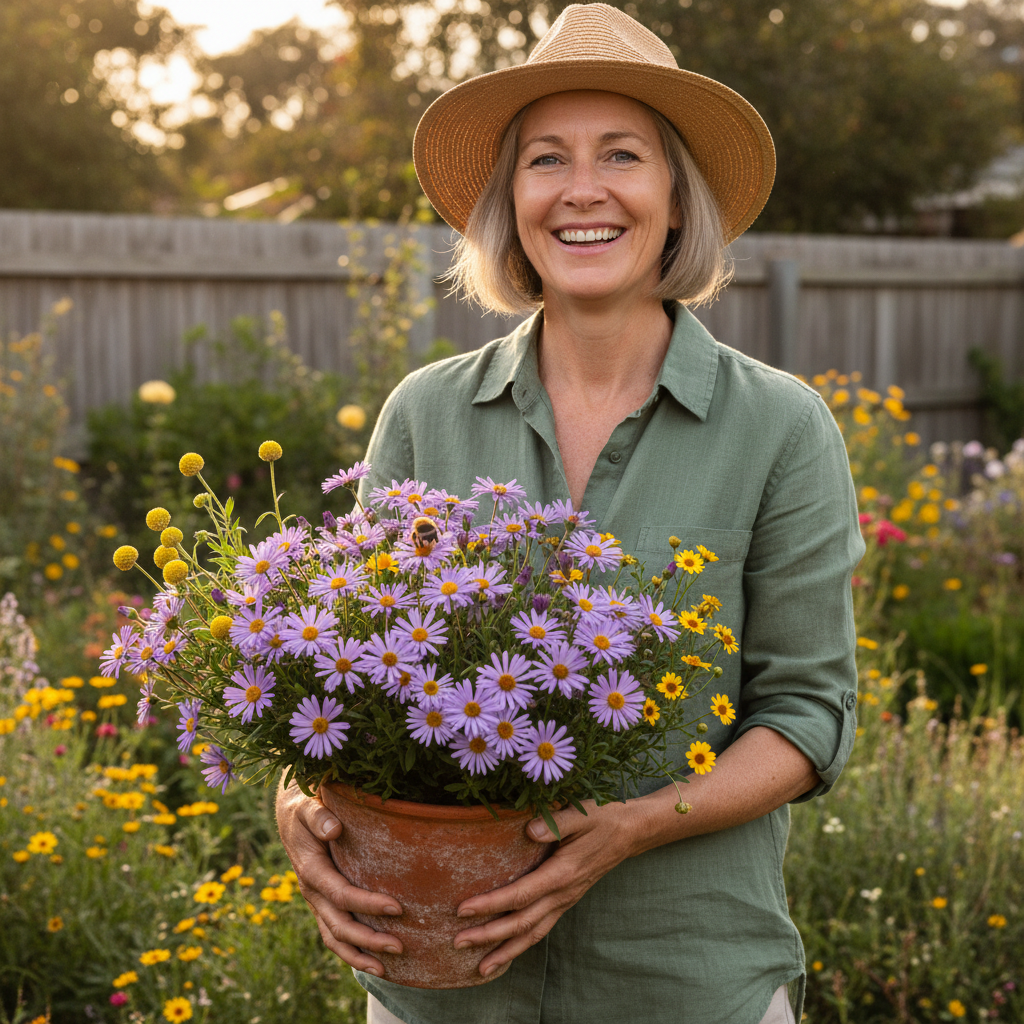
Plant blue, purple & yellow
Bees see these colours best. Plant in clumps of one colour rather than dotting single flowers around.
Mix up flower shapes
Flat daisies suit tiny bees, while tubular flowers like salvia and lavender suit long-tongued ones.
Add a water stop
A shallow saucer filled with pebbles and water gives bees a safe place to drink on hot days.
Offer a bee hotel
Drilled hardwood or bamboo with 3–10mm holes, fixed at least 1m up and facing the morning sun.
Shelter from the wind
Place pots against a wall or screen. Bees forage more where it's calm and warm.
07 · Native Bees & The Plants They Love
Meet The Locals In Your Garden
Six native bees you're likely to spot this summer, and the flowers that will bring them to your garden.
All mainland states
Blue-banded bee
Amegilla cingulata
Fast, solitary and striped in shimmering blue. A champion buzz pollinator that sleeps clinging to plant stems by its jaws.
Plants they love
Lavender
Salvia
Dianella
Tomato flowers
East coast
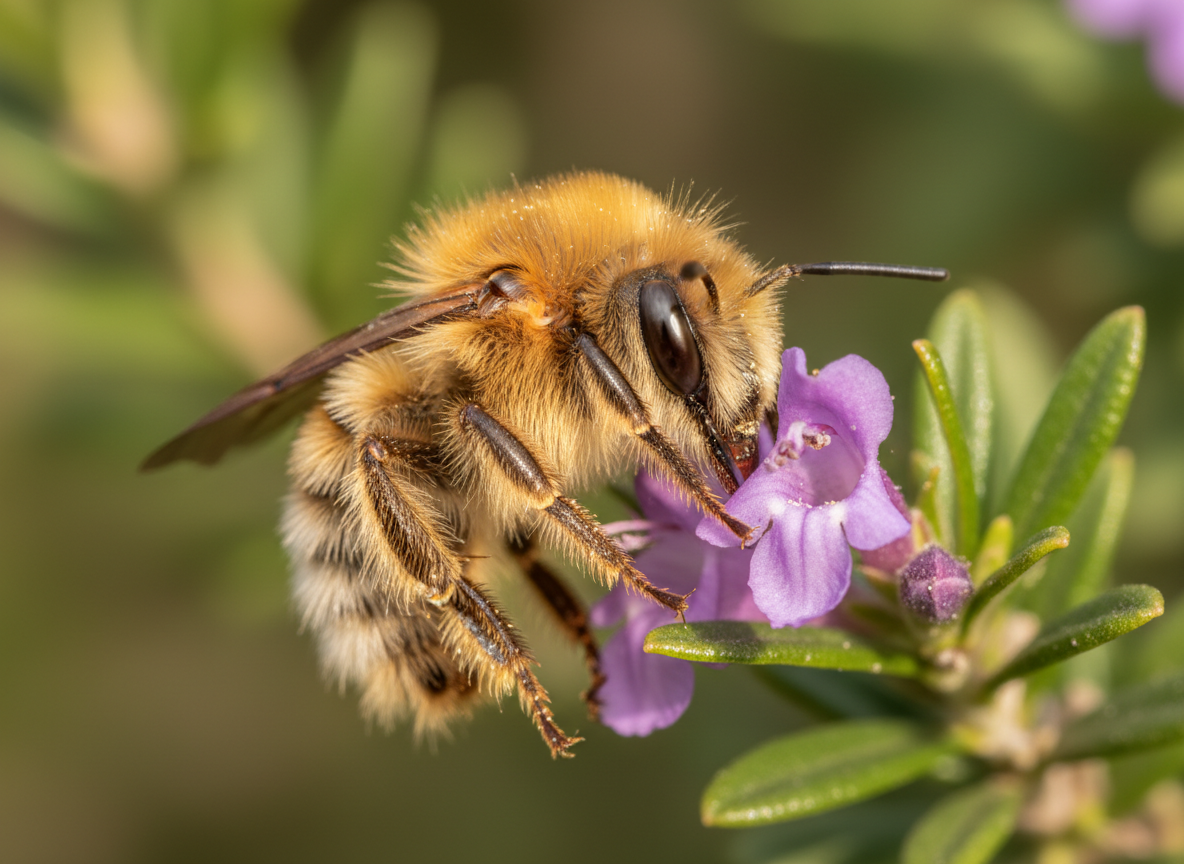
Teddy bear bee
Amegilla bombiformis
Round, fluffy and golden-brown. A gentle buzz pollinator that nests in burrows in soft soil banks.
Plants they love
Westringia
Hibbertia
Lavender
Borage
Queensland & coastal NSW
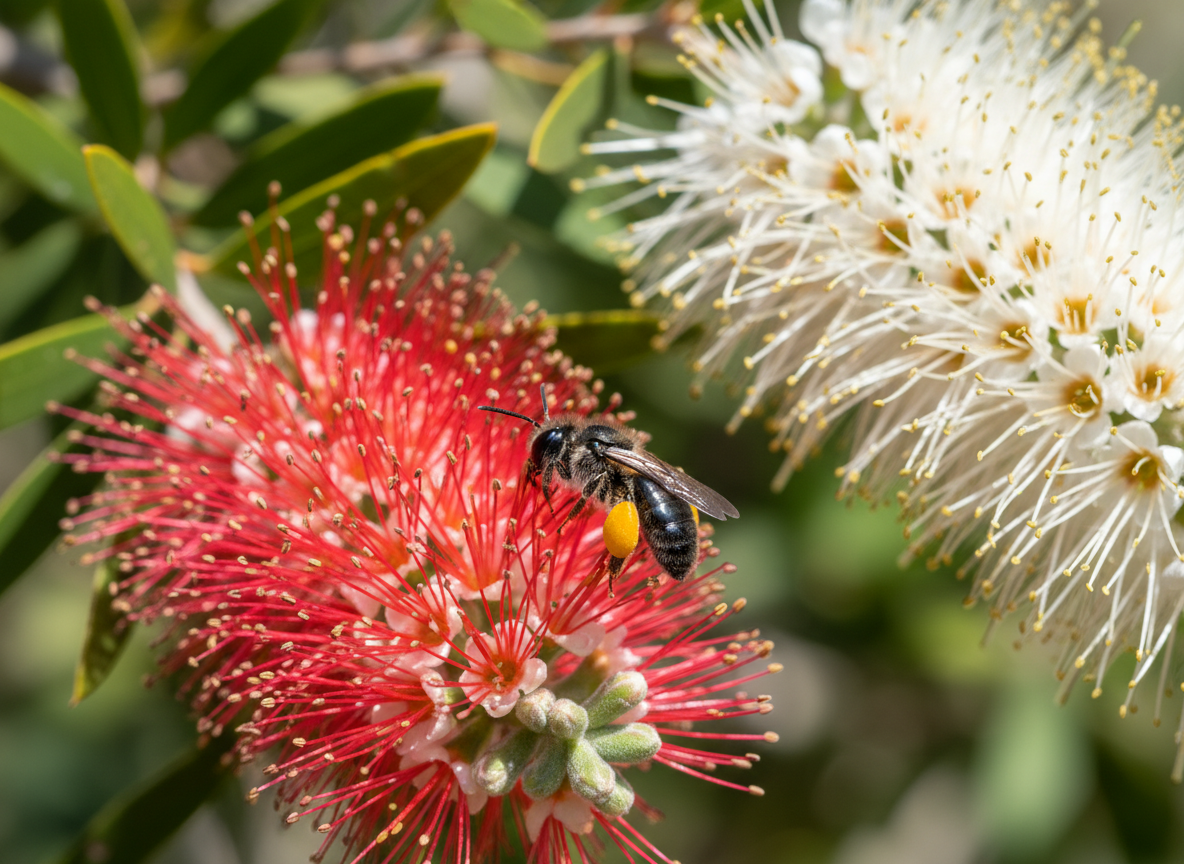
Sugarbag bee
Tetragonula carbonaria
A tiny black stingless bee that lives in colonies and makes a tangy "sugarbag" honey. Easy to keep in a backyard hive.
Plants they love
Grevillea
Tea tree
Bottlebrush
Lilly pilly
Australia-wide
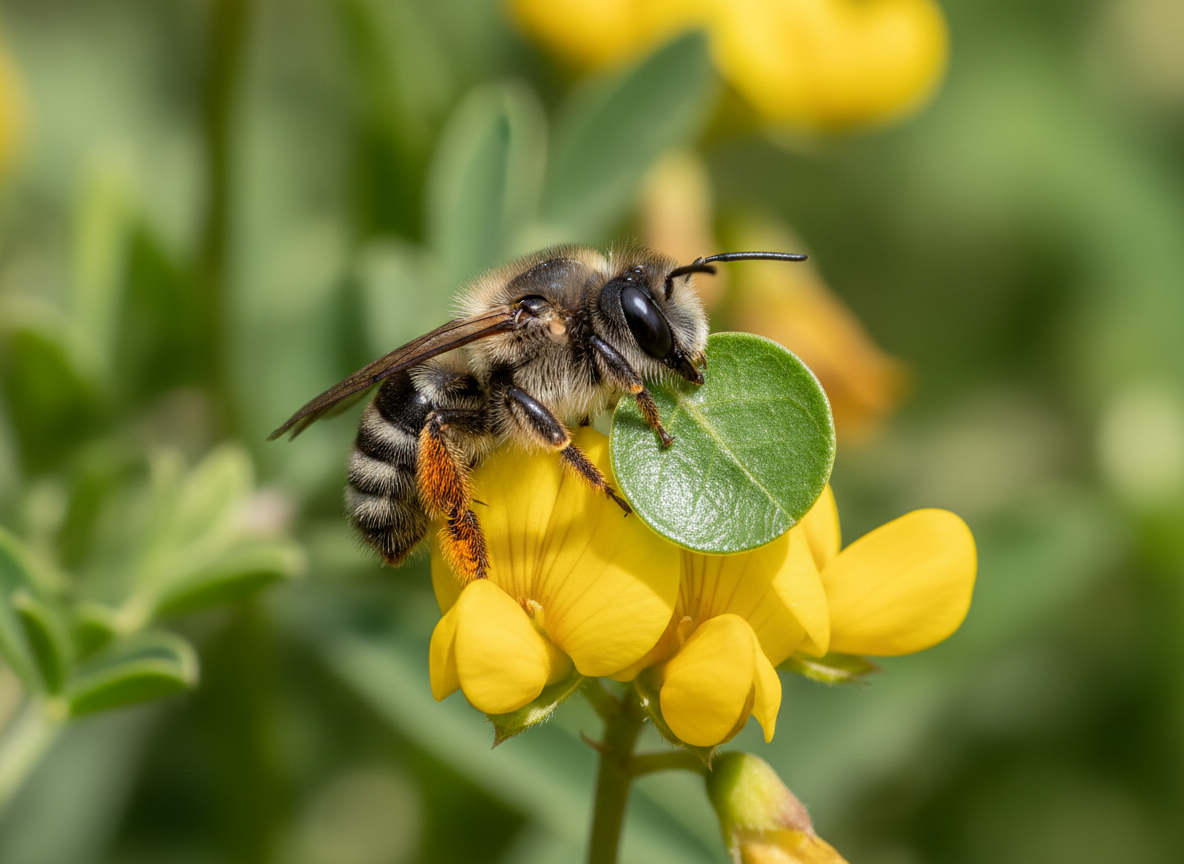
Leafcutter bee
Megachile spp.
Cuts neat circles out of soft leaves to line its nest. Carries pollen on the underside of its belly and loves bee hotels.
Plants they love
Coral pea
Goodenia
Emu bush
Daisies
South-east Australia
Reed bee
Exoneura spp.
Slender and only a few millimetres long. Nests inside dead, pithy stems, so leave a few prunings standing.
Plants they love
Swan River daisy
Yellow buttons
Tea tree
Australia-wide
Masked bee
Hylaeus spp.
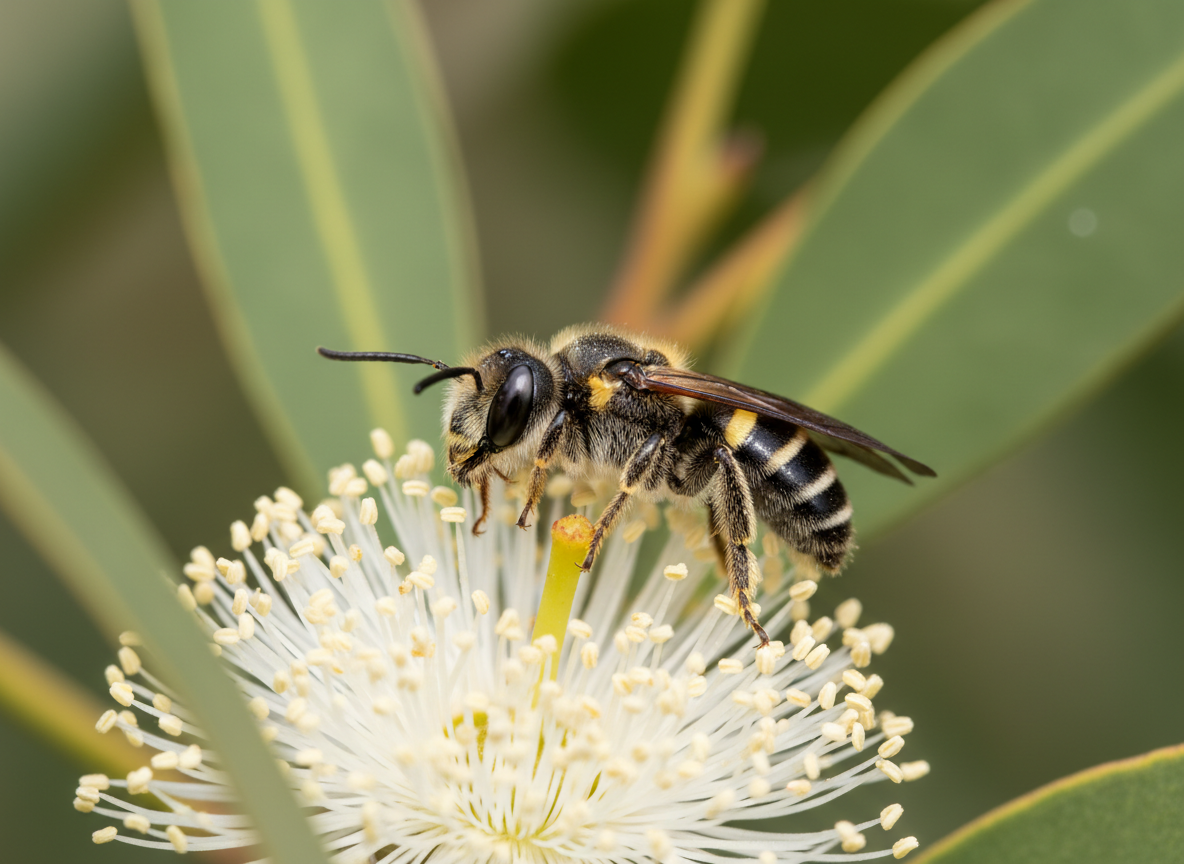
Small, sleek and often wasp-like, with bright yellow or white markings on its face. It carries pollen in its stomach.
Plants they love
Eucalyptus
Paperbark
Westringia
Alyssum
08 · Native Bee FAQs
Your Questions, Answered
Everything you need to know about your free seeds, native bees and making your garden a better place for pollinators.
How do I get my free seeds?
You don't need to do anything. Every order placed through summer includes a spoonful of Bee Friendly Flower Mix, packed in your parcel automatically while stocks last. No code needed.
Do native bees sting?
Most native bees are gentle and rarely sting unless they're handled or squashed. Many are too small to pierce skin, and stingless bees like the sugarbag bee can't sting at all, which makes them ideal around children and pets.
Is the seed mix all Australian native?
Not entirely. The mix includes two Aussie natives, Swan River daisy and native violet, alongside easy-to-grow, non-invasive garden annuals that bees love, such as borage, lavender and alyssum. For a fully native garden, add the local plants from our region guide.
Why do native bees need help if honey bees are everywhere?
European honey bees arrived in Australia in the 1820s. Native bees were here long before them, and many native plants rely on them for pollination. Some native bees only feed on a few kinds of plants, so losing those flowers can mean losing the bees.
When is the best time to sow my seeds?
In temperate and cool areas, spring to early summer and early autumn work best. In the tropics, sow during the cooler dry season. If your pack arrives during a heatwave, keep it somewhere cool and dry and sow when temperatures drop.
Can I grow the seeds in pots?
Yes. Use a pot at least 30cm wide filled with seed-raising mix, place it in full sun and keep the surface moist until seedlings appear. Pots dry out faster than garden beds, so check them daily in summer.
How long until I see flowers?
Seedlings usually appear within 1–3 weeks, and the first annuals flower in around 8–12 weeks. Perennials such as lavender and sage may not bloom until their second year, which keeps your garden flowering into next season.
Do I need a bee hotel?
It helps, but most native bees actually nest in the ground. Leave a sunny patch of bare, undisturbed soil without mulch, and a few hollow or pithy stems. Together with a bee hotel, that covers most species.
What is Australian Pollinator Week?
Australian Pollinator Week is held each November to celebrate the insects and animals that pollinate our plants. In 2026 it runs from 7 to 15 November. Join in by planting flowers, building a bee hotel, or spending ten minutes counting the pollinators that visit your garden.
Protection wherever you are, whenever you need. Our best seller delivers a rich composition of antioxidants, minerals, and enzymes to support a healthy immune system & reduce free radicals formed in the body. Propolis has also been traditionally used to relieve symptoms of...
Why You’ll Love It
Helps Reduce Free Radicals Formed In The Body
Antioxidant Support
Helps Soothe Oral Irritation
Supports A Healthy Immune System
Direct Application To Infected Area
Travel Essential
Our Propolis & Manuka Honey Spray combines the potent health benefits of propolis and MGO 280+ Manuka honey. It offers over 500 beneficial compounds, including flavonoids and phenolic acids, that help reduce oral irritation & support immune health.
How To Use
Adults - Spray 1.25ml (9 sprays), into mouth twice daily, or as directed by your healthcare practitioner. Shake well before use.
Contains ethanol. Not suitable for infants under the age of 12 months. Propolis may cause allergic reactions. Test on skin before use.
If skin irritation or swelling of the mouth or throat occurs, discontinue use. If symptoms persist, consult your health care practitioner.
The sweet, nutritious swap they’ll never know you made. Made with just two wholefood ingredients - Manuka Honey & Bee Pollen - creamed into a deliciously smooth spread easy to fall in love with. Each spoonful brings a diverse range of wholefood nutrients to support their b...
Contains bee pollen, which can cause severe allergic reactions. Not suitable for infants under 12 months.
More peace of mind starts with a more balanced gut. Our Gut-Immune Complete takes a 3-in-1 approach to gut health; starting with a clinically studied probiotic to support a balanced microbiome, pairing it with gentle low-FODMAP prebiotic fibre and polyphenols to nourish benefi...
Contains propolis. Propolis may cause allergic reactions. If irritation or swelling of the mouth or throat occurs, discontinue use.
Not suitable for children. Use in children under 12 years is not recommended.
Do not use if pregnant or likely to become pregnant, or while breastfeeding.
Bacillus coagulans may affect the way some medicines work, including immunosuppressants.
Consult your health professional before taking with other medicine. If symptoms persist or worsen, talk to your health professional.
A 100% whole-food nutritional blend that helps fill the gaps when life gets in the way. Each serving delivers naturally occurring vitamins, minerals, antioxidants, and phytonutrients to help provide your body the exact fuel it needs day in, day out. A one-of-a-kind blend, elev...
How To Use
Add 8 grams (approx. 1 scoop) to water, juice, smoothies or foods such as yoghurt, chia puddings & energy balls
This product contains Bee Pollen Powder which can cause severe allergic reactions in certain individuals
Contains: Wheat & Barley may contain Fish, Shellfish, Crustaceans & Molluscs (incidental inclusion during wild harvesting of kelp)
Our Greens & Reds with Bee Pollen is gluten free.
Store in a cool, dry place below 25C. It is recommended to refrigerate after opening
Due to the use of natural wholefood ingredients, some settling or residue may occur when mixed
Sunny Time's Creamed Raw Honey is pure Australian honey, gently cooled and slowly stirred to create a light, silky texture. A small homage to those sun-drenched moments of warmth and comfort.
They begin with their raw honey and add a little naturally crystallised honey, much...
How To Use
However you please!
All profits go towards planting native trees & restoring vital habitats for our bees!
A velvety smooth face cream that deeply nourishes your skin. Each ingredient has been carefully selected for its rich composition of vitamins, minerals, and antioxidants, including nourishing Australian botanical extracts and healing bee-hive ingredients - to strengthen, hyd...
Why You’ll Love It
Deep, Long Lasting Hydration
Protects Against Everyday Damage
Promotes Firmer Skin
Enhances Overall Radiance
Heals Damaged Skin
Antioxidants For A Bright Complexion
This luxurious face cream combines the best of nature with a powerful blend of native Australian botanicals and locally sourced bee hive ingredients, known for their incredibly rich composition of nutrients. Together, they deliver deep, long-lasting hydration, ensuring your skin stays soft, supple, and hydrated throughout the day.
How To Use
Massage evenly onto face and neck each morning in an upward motion after thoroughly cleansing and toning.
Our products are suitable for all skin types. Featuring over 99% natural ingredients, our products are made up of gentle, non-reactive ingredients that are supercharged with essential nutrients to soothe, heal, repair & revitalise even the most sensitive of skin types.
We are proudly free from all harmful chemicals and cheap fillers.
*If you suffer from bee allergies, please check with a medical advisor before trying our products.
Protection outside & within. High-potency 40% propolis in an alcohol-free tincture for direct, targeted support. Use on skin to protect minor cuts and support wound healing, or take orally to soothe irritation, relieve mild mouth ulcers and support immune function.
Why You’ll Love It
Soothe Oral Irritation
Antimicrobial For Minor Cuts & Abrasions
Antioxidant Support
Helps To Soothe Skin Inflammation
Direct Application To Infected Area
Supports A Strong Immune System
Natural Life™ Propolis Liquid 40% is a high-strength, alcohol-free formula, traditionally used to assist in soothing symptoms in mild mouth ulcers.
How To Use
Directions for internal use: Adults - take 1mL (20 drops) twice daily or as directed by your healthcare professional
Directions for buccal use inside the mouth: Adults - dilute 1mlL (20 drops) into 20mL of water and swish around the mouth for 30 seconds, twice daily. May be swallowed.
Directions for topical use: Adults - after cleansing the wound apply sparingly to the affected area, three times daily
Propolis may cause allergic reactions.
If irritation or swelling of the mouth or throat occurs, discontinue use.
If symptoms persist, consult your health care practitioner
Store in a cool, dry place.
Tamper evident packaging - do not use if seal is broken.
Award WinningPlants A Native TreeFrom SydneyAussie Honey
An infusion of Australia's finest. Yuzu is an ancient citrus with amazing aromatics that the Japanese believe increases happiness. Handpicked on the slopes of the Ovens Valley in the Victorian Alps, this Australian raw honey is infused with yuzu peel & juice, offering a me...
Every jar of Rooftop Bees’ award-winning Yuzu Honey sold this month directly supports Aussie beekeepers and funds the planting of a native tree - helping to create lasting impact for our pollinators. Native flowering trees provide vital nectar and pollen, expanding food sources for both honeybees and Australia’s 1,700+ native bee species, while also restoring habitats lost to urbanisation. By strengthening biodiversity and easing resource competition, these plantings help ensure healthier, more resilient bee populations - so your purchase not only tastes good, it actively protects the future of Australia’s bees.
* Due to strict Western Australian biosecurity regulations, we are unable to ship our Manuka Honey to the region to protect local agriculture and ecosystems.
How To Use
Enjoy it as you like!
Batch crafted in Sydney, Australia. Gold Medal, 2024 Sydney Fine Food Show.
All-in-one nutrition, simplified naturally. Meet nature’s multivitamin, a complete range of all essential nutrients that combine to fuel the thousands of vital processes in your body and lay the foundation for vibrant health all year round.
As a true whole-food, each nutrient ...
Why You’ll Love It
100% Pure, Non-Irradiated & Australian
Natural Burst Of Energy
Sustained Energy Levels
Improves Digestive Health
Supercharges Your Immune System
Nutrient Powerhouse
Our bee pollen is chemical free & ethically sourced from the Redgum Eucalyptus forests in Western Australia. Unlike many competitors that source their pollen from overseas, our bee pollen is proudly non-irradiated, a process that involves exposing it to low doses of ionising radiation to eliminate harmful bacteria, viruses, or pests when crossing the border into Australia. This process removes the natural nutritional value of bee pollen and ultimately makes it sterile.
How To Use
Take 1/2 - 1 teaspoon 2 times per day to experience the burst of energy that our nutrient rich bee pollen granules offer. Mix it into your water, juice or smoothie, or sprinkle it over your fruit or yoghurt. We love to pair it with our Manuka Honey to boost our brain power & optimise our energy production to get us through the day.
Allergy sufferers may experience a severe reaction. Store in a cool, dry place. Tamper evident packaging - do not use if seal is broken.
The family favourite. Each lozenge combines the protective power of Propolis with the antibacterial strength of Manuka Honey MGO 550+ and the refreshing clarity of pure Lemon Oil for moments when your throat needs a little extra care.
The result is a naturally delicious blend ...
Why You’ll Love It
A Delicious Investment In Health
Assists In Reducing Inflammation
Helps To Soothe Irritation
Anti-Bacterial To Help Fight Infection
Helps To Reduce Further Infection
300+ Bio-Active Compounds
Natural Life™ Propicol Candy combines the healing properties of Manuka Honey, Propolis, and Lemon Oil into a delicious, all-natural candy.
How To Use
Dissolve one candy slowly in the mouth to experience the soothing effects of our candy.
Propolis may cause allergic reactions. If irritation or swelling of the mouth or throat occurs, discontinue use. If symptoms persist, consult your health care practitioner.
Store in a cool, dry place.
Tamper evident packaging - do not use if seal is broken.